Line X vs Rhino Liner: Specs, Real Differences and How to Compare Quotes
On this page
If you’re shopping for a spray-in liner, the question usually comes down to two names. Line X vs Rhino Liner is the oldest argument in the bedliner business, and both sides have loyal fans. The honest answer is that both brands sell good products, both have different product tiers, and the shop that sprays your truck matters at least as much as the logo on the door. This guide compares what each brand publishes, explains the specs that actually matter, gives you a tool to compare two quotes side by side and lists the questions to ask before you hand over the keys.
Who LINE-X and Rhino Linings are
Both are spray-applied polyurea and polyurethane-hybrid coating companies that sell through networks of franchised or licensed dealers. That means:
- Your experience depends on the local shop. Prep, thickness and finish come down to the applicator.
- Each brand has several products. “LINE-X” or “Rhino” on its own doesn’t tell you which material is going in your bed.
- Warranties come through the dealer network. Read the terms for the product you’re actually buying.
Both brands also sell their coatings for industrial work, such as tanks, floors and containment, so neither is just a truck accessory company.
Line X vs Rhino Liner: published specs
Here’s what each brand publishes. Treat these as manufacturer claims, not an independent head-to-head test.
| Spec | LINE-X Platinum | LINE-X Standard | Rhino Hybrid line |
|---|---|---|---|
| Tensile strength | 3,065 psi | 2,147 psi | Described as “high tensile strength”; see product data sheets |
| Tear strength | 750 lb/in | 490 lb/in | Described as “high tear strength” |
| Elongation | 203% | 91% | See data sheets |
| Hardness | 55 to 57 Shore D | 50 ±1 Shore D | See data sheets |
| Temperature range | Not listed on the same page | Not listed on the same page | Stable from -40°F to 175°F |
| Solids | Not listed on the same page | Not listed on the same page | 100% solids, no VOCs or solvents |
Sources: LINE-X’s “Is a bedliner indestructible?” article for LINE-X numbers, and Rhino Linings’ Rhino Hybrid product page for Rhino. LINE-X’s article also puts “other spray-on” liners at 1,700 to 1,900 psi tensile, which is its own comparison.
The table’s gaps are part of the story. The two brands don’t publish their numbers the same way, which makes a true apples-to-apples comparison hard. If you want one, ask each shop for the technical data sheet of the exact product they’ll spray.
Which specs actually matter
Tensile and tear strength tell you how hard the coating is to rip or cut. Higher numbers help with sharp-edged cargo like rebar, stone and tools.
Elongation is how far the coating stretches before it breaks. Truck beds flex, and a liner that can stretch is less likely to crack at seams and bends.
Hardness (Shore D) is a trade-off. Harder liners resist gouging. Softer ones grip cargo better and absorb impacts.
UV stability decides whether your black liner stays black. Most bed liner base coats are aromatic and fade or chalk in sun. LINE-X markets its Premium bedliner as having UV resistance to prevent fading, and many shops offer an aliphatic topcoat. Our post on why black bedliners fade explains the chemistry.
Thickness may matter more than any lab number. A strong material sprayed thin can wear through faster than a softer one sprayed thick. LINE-X, for example, markets a MAX bedliner with a 25% thicker floor coating.
Real-world differences owners notice
These are the differences people talk about most. They vary by product and shop, so check them on the truck you’re quoting.
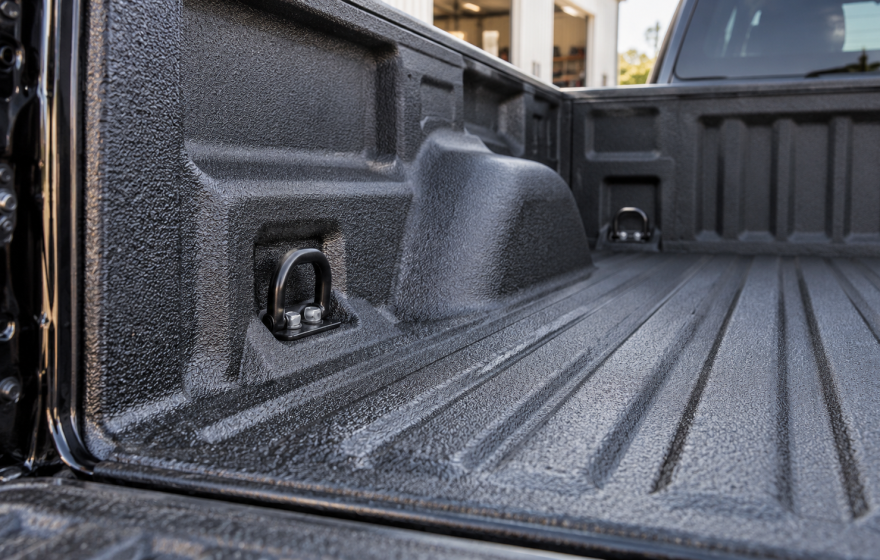
- Texture. Liners differ in how rough the finish is. A rough finish grips cargo but is harder to clean. Ask to see a sample panel.
- Hardness and feel. Some liners feel harder, others softer and more rubbery. Harder finishes tend to show scuffs less. Softer ones tend to grip better.
- Color and fading. Base black fades on both unless there’s a UV-stable topcoat or a UV-resistant product.
- Coverage options. Under the rail, over the rail, tailgate, and even full-body coating. Price changes with each.
- Warranty terms. Brands and dealers word these differently. Check transferability if you sell trucks often. Our post on verifying a used truck’s liner warranty explains why.
Compare two bedliner quotes
Enter each shop’s quote. The tool lines them up and works out cost per year of warranty, so a cheaper quote with a short warranty doesn’t look better than it is.
Bedliner quote comparison
| Quote A | Quote B | |
|---|---|---|
| Brand / product | ||
| Price ($) | ||
| Warranty (years) | ||
| Floor thickness quoted (mils) | ||
| UV topcoat or UV product | ||
| Over the rail |
Example prices are placeholders. Use the numbers from your own quotes. For typical price ranges, see our guide to what a spray-on bedliner really costs. This breakdown of F-150 spray-in bed liner cost covers one of the most-quoted trucks.
How to pick the shop, not just the brand
Since both brands go through local dealers, the shop decides most of what you get. Ask:
- Which exact product will you spray? Get the name and a data sheet.
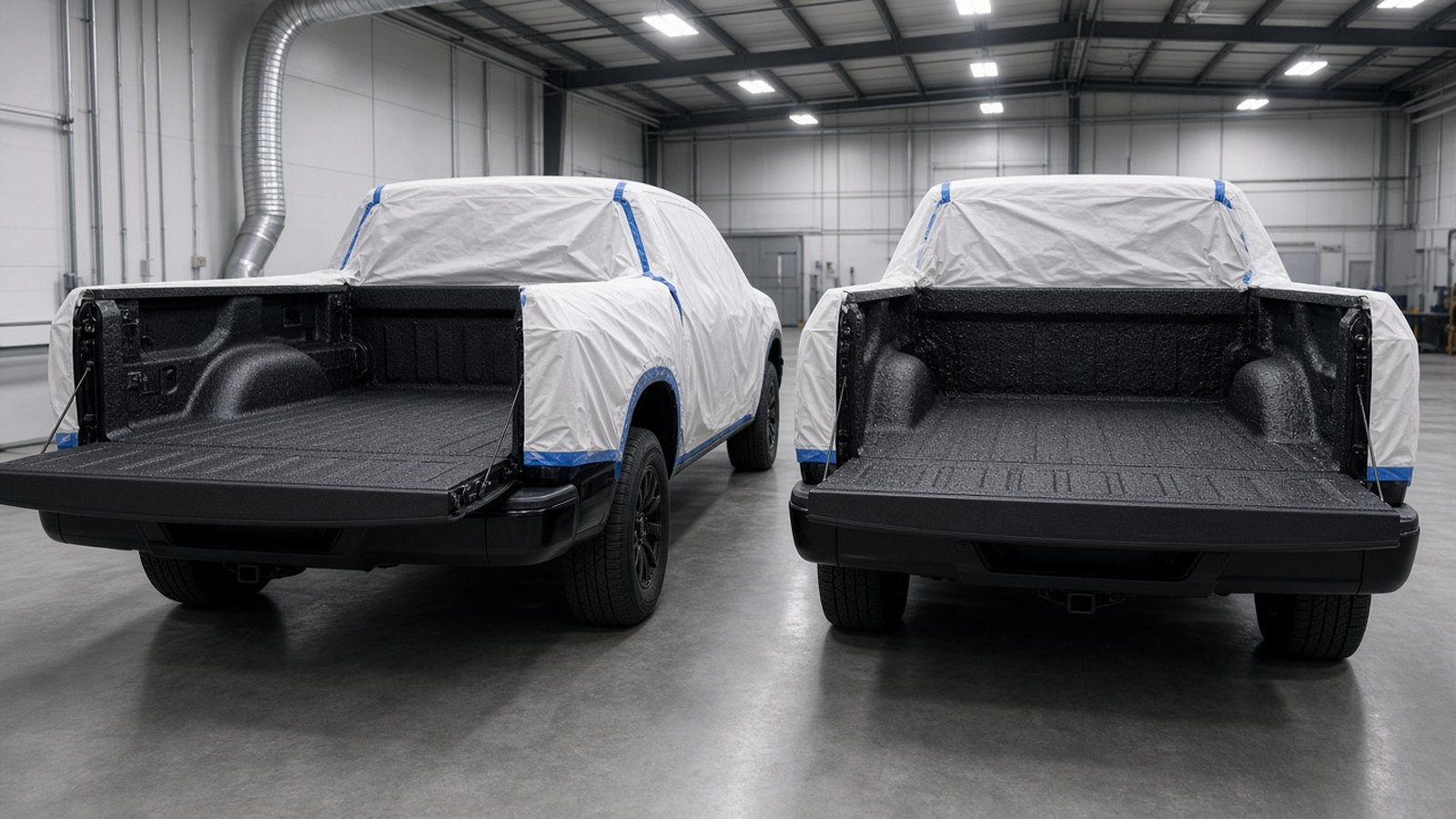
- How do you prep the bed? Good shops remove bolts and hardware, scuff or blast the paint and mask carefully.
- What thickness will the floor and walls get? Ask for a number, and how they check it.
- What about tie-downs and bolts? Agree on how they’ll be handled first. See our post on tie-down and mounting access.
- Can I see a truck you’ve done? A recent one and an older one, if possible.
- What does the warranty cover? Peeling, cracking, fading? Is it transferable?
Our guide on choosing a qualified bed liner company goes further.
What a bad spray job looks like
Whatever brand you choose, these are the signs that the application, not the material, went wrong. Check for them at pickup and again after the first few months:
- Peeling at the edges. Usually a prep or masking problem. Edges along the rails and tailgate are where it starts.
- Thin spots. Shiny or smooth patches on the floor, especially between ribs, can mean low film build.
- Bubbles or pinholes. Often from moisture or contamination on the bed during spraying.
- Overspray. On paint, glass, the hitch or the bumper. A careful shop masks all of it.
- Blocked drains or covered tie-downs. Both should have been agreed before the spray.
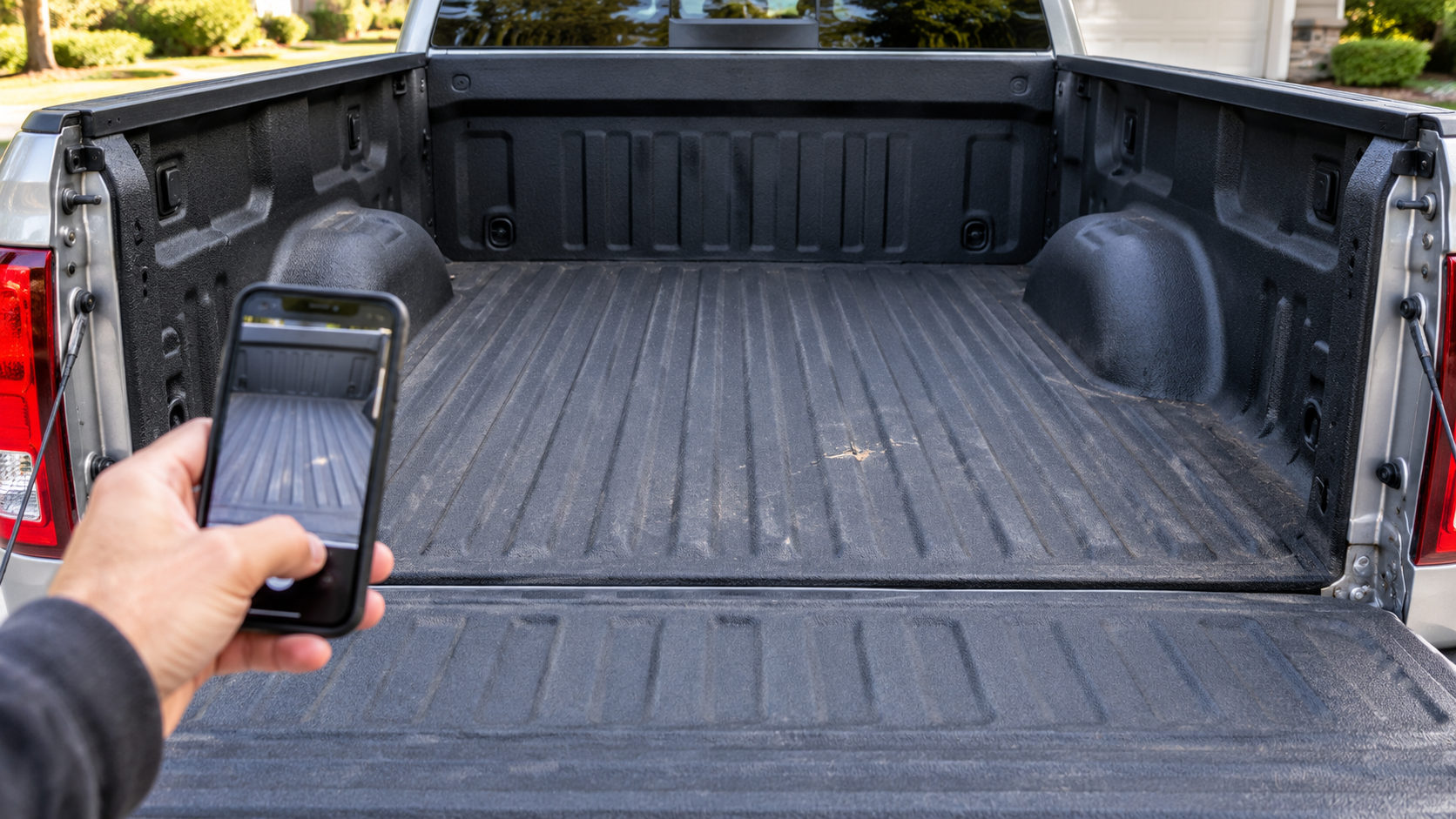
Our pickup handover checklist walks through the inspection step by step. If you do need a repair later, photos and the original product records make the claim much easier, as we explain in bedliner repair estimates.
Looking after either liner
Both brands’ liners are tough, but a few habits help:
- Wash out mud, salt and chemicals rather than leaving them to sit.
- Check which coating you have before using strong cleaners. See identify the coating before cleaning.
- Watch hot cargo. Every liner has a service temperature limit.
- Touch up gouges early, before water gets under the edge.
Other options to compare
LINE-X and Rhino aren’t the only choices. Independent polyurea brands, including ArmorThane, are sprayed by shops across the country. Ask for their data sheets and compare them the same way. Drop-in liners and DIY roll-on kits are cheaper. Here’s how they stack up:
- Drop-in liners are cheap and removable but can trap water and grit. We compare them in spray-in vs drop-in bedliners.
- Roll-on kits are a budget DIY option. This guide to roll-on bed liner covers prep and coats.
- DIY spray kits sit in between. See DIY bedliner products.
Whichever you pick, our post on how long a spray-in bedliner lasts covers what shortens a liner’s life.
Line X vs Rhino quote checklist
☐ Exact product named
Not just the brand.
☐ Data sheet received
Tensile, elongation, hardness, temperature range.
☐ Floor thickness in mils
Written on the quote.
☐ Prep method described
Hardware removal, scuff or blast, masking.
☐ UV protection decided
Topcoat or UV-stable product, or accept fading.
☐ Coverage agreed
Under the rail, over the rail, tailgate.
☐ Warranty read
What’s covered and whether it transfers.
Line X vs Rhino Liner FAQ
Is LINE-X better than Rhino?
Neither is better across the board. Both have several product tiers, and results depend heavily on the shop. Compare the exact products, thickness, UV protection and warranty on your quotes.
Which is harder, LINE-X or Rhino?
LINE-X lists its Platinum product at 55 to 57 Shore D and Standard at 50 ±1 Shore D. Rhino’s hardness varies by product, so ask for the data sheet of the product you’re quoted.
Do LINE-X and Rhino liners fade?
Standard black liners from most brands fade in sun over time. LINE-X markets its Premium bedliner as UV resistant, and many shops offer a UV-stable topcoat.
What temperature can Rhino Hybrid handle?
Rhino Linings says Rhino Hybrid is stable from -40°F to 175°F.
Can you spray over an old liner?
Sometimes, with the right prep, but it depends on the old liner’s condition and type. Ask the shop how they’d prepare it, and get it in writing.