
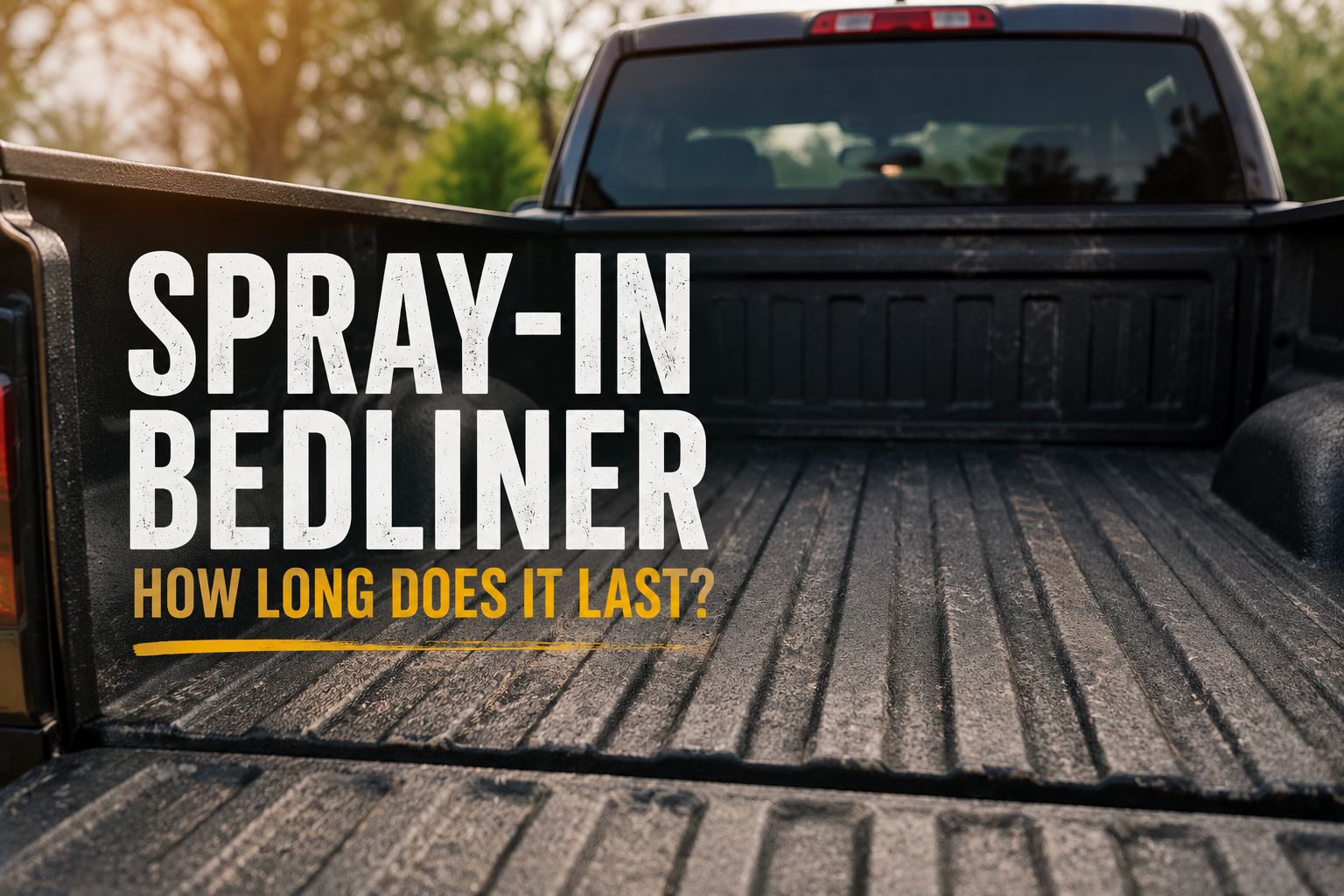
How Long a Spray-In Bedliner Lasts and What Shortens It
Ask ten truck owners how long their spray-in bedliner lasted and you’ll get ten different answers, and most of them won’t be talking about the same thing at all. One person’s bedliner is going strong at twelve years because it hardly ever hauls anything heavier than groceries. Another person’s bedliner is showing real wear at two years because it’s been the workhorse for a landscaping business, loaded and unloaded daily with mulch, rock, and tools that don’t treat a truck bed gently. Both of those experiences are legitimate, and neither one is really a mystery once you look at what each truck was actually asked to do. The bedliner itself isn’t really the variable, how it’s used and how it was applied usually are.
This piece looks at what actually determines a spray-in bedliner’s lifespan, and more usefully, what specifically shortens it, since knowing the failure points tends to matter more to a truck owner than a single generic number ever could.
There’s No Single Honest Answer to “How Long Does It Last”
A quality spray-in bedliner, properly applied to a properly prepped surface, can reasonably be expected to last the life of the truck under normal use, which for a lot of owners means well over a decade. That’s the honest, if slightly unsatisfying, starting point. It’s also true that plenty of bedliners show meaningful wear within a few years, and the gap between those two outcomes almost always traces back to a handful of identifiable factors rather than random luck.
Anyone selling a bedliner with a single confident number, “this will last exactly eight years,” is giving you marketing, not an engineering answer, because the actual answer depends heavily on things specific to your truck and how you use it.
What Actually Determines Lifespan
Material quality is the obvious starting point, but it’s worth being specific about what that means. Not every product marketed as a “spray-in bedliner” uses the same formulation, and cheaper, lower-grade materials generally show wear, cracking, or peeling sooner than a properly formulated polyurea or polyurethane system. This is one of the areas where price and quality genuinely correlate, though a high price alone doesn’t guarantee good material either.
Application quality matters just as much, arguably more, since even the best material applied over a poorly prepped surface will fail early through adhesion problems that have nothing to do with the coating itself. A bed that wasn’t properly cleaned, degreased, and profiled before spraying gives the coating a weak foundation to bond to, and that weak bond shows up eventually as peeling, bubbling, or edges lifting, sometimes well before the coating’s actual material properties would have caused a problem on their own.
Then there’s simple usage. A truck bed hauling heavy, abrasive material daily, gravel, concrete, scrap metal, is going to show wear faster than one used occasionally for lighter cargo, and that’s not a defect in the coating, it’s just physics. Sharp-edged cargo dragged across the surface repeatedly will eventually wear through even a well-applied coating faster than gentler use would.
Climate and environmental exposure round out the list. Consistent, intense UV exposure, extreme temperature swings, and heavy chemical exposure from certain cargo types all accelerate wear in ways that vary a lot by region and how the truck is actually parked and used day to day.
What Specifically Shortens a Bedliner’s Life
Beyond the general factors above, a few specific issues tend to show up repeatedly as the actual cause when a bedliner fails earlier than expected.
Rushed or skipped surface preparation is probably the single most common culprit, and it’s almost entirely invisible until problems start showing up months or years later. A shop under pressure to turn jobs around quickly can be tempted to shortcut the cleaning and profiling stage, and the coating applied on top will look identical to a properly prepped job on day one, which is exactly what makes this problem so hard for a truck owner to catch before it’s too late.
Cheap DIY kits applied without proper technique are another common source of early wear, though this isn’t really a knock on DIY as a concept, it’s more about the gap between what a kit can deliver and what a professional application achieves. Our piece on DIY bedliner products and what they do and don’t deliver goes into this specific comparison in more depth, since understanding those limitations upfront helps set realistic expectations rather than being surprised later.
Sustained heavy abrasive use without any protective habits, like using a bed mat under especially abrasive cargo or being mindful about dragging sharp objects across the surface, accelerates wear regardless of how good the original coating was. This isn’t about babying the truck, it’s about recognizing that a bedliner is tough but not indestructible, and some cargo types are simply harder on it than others.
Extended, intense UV exposure without a UV-stable topcoat can lead to fading, chalking, or surface degradation over time, which is more of a cosmetic issue than a structural one but still affects how “worn” a bedliner looks and, for some owners, how confident they feel in the coating’s continued protection. Our guide on understanding bedliner discoloration covers this specific issue in detail, including how to tell cosmetic discoloration apart from an actual coating problem.
Signs of Normal Wear vs. Signs of an Actual Problem
Not every change in a bedliner’s appearance means something is wrong. Minor surface scuffing, small scratches from normal cargo handling, and gradual, even fading from UV exposure are all part of a bedliner doing its job, absorbing wear that would otherwise be happening directly to the truck’s metal bed.
What’s worth actually paying attention to is different: peeling or lifting at the edges, especially near the tailgate or bed rail, bubbling anywhere on the surface, which usually indicates trapped moisture or a bond failure underneath, and any area where the coating has worn through completely to bare metal, which needs prompt attention before rust starts developing underneath. These are the signs that point toward an application or material issue rather than expected wear, and catching them early usually means a manageable repair instead of a full recoat.
How Application Quality Shows Up Years Later
This is worth dwelling on because it’s the factor truck owners have the least visibility into at the time of purchase. Two bedliners can look absolutely identical on the day they’re finished, glossy, even, textured exactly the way they should be, and diverge completely in how they hold up over the following years based entirely on what happened during surface prep and application, steps the owner never actually watched closely enough to judge.
This is part of why choosing the right shop matters more than most people initially assume when they’re mainly comparing prices. Our guide on selecting a qualified truck bed liner company covers what to actually look for and ask about before booking a job, since the questions that reveal a shop’s real quality standards aren’t the ones most people think to ask.
Lifespan Factors at a Glance
| Factor | Impact on Lifespan | What Helps |
|---|---|---|
| Material quality | Lower-grade coatings wear, crack, or peel sooner | Choose a proper polyurea/polyurethane formulation, not the cheapest option available |
| Surface preparation | Poor prep causes early adhesion failure regardless of coating quality | Confirm the shop’s prep process before booking |
| Usage intensity | Heavy, abrasive cargo accelerates wear | Use bed mats or liners under especially abrasive loads when practical |
| UV exposure | Causes fading and chalking over time | UV-stable topcoat, garage parking where feasible |
| Application technique | Inconsistent thickness or rushed work shortens effective life | Choose an experienced, reputable applicator |
What Determines Whether a Coating Can Be Repaired or Needs Full Recoating
A bedliner showing isolated wear, a scuffed area, minor discoloration, small scratches, can often be spot-repaired without redoing the whole bed. Widespread peeling, bubbling across multiple areas, or significant wear-through in several spots usually points toward a full recoat being the more sensible option, since patching a coating that’s failing broadly tends to be a short-term fix rather than a real solution. Understanding what the coating actually is and how it’s supposed to bond and perform helps make sense of why some damage is a quick fix and other damage isn’t. Our overview of what bedliners are made of and how the application process works covers that foundation.
Frequently Asked Questions
What’s a realistic lifespan for a professionally applied spray-in bedliner?
Under normal use with quality material and proper application, many owners get well over a decade of solid performance, though heavy commercial use or harsh climate exposure can shorten that meaningfully.
Does a more expensive bedliner always last longer?
Not automatically, but price often correlates with material quality and, more importantly, the shop’s prep and application standards, which matter more to longevity than the coating material alone.
Can a worn bedliner be recoated instead of replaced?
In many cases, yes, particularly if the underlying application was sound and wear is more cosmetic than structural. Widespread failure across the coating usually calls for a full recoat rather than a patch.
Does climate really make a noticeable difference in how long a bedliner lasts?
Yes. Intense, sustained UV exposure and extreme temperature swings accelerate wear and fading compared to a more moderate climate, which is part of why the same coating can perform differently in different parts of the country.
Is it normal for a bedliner to show some fading over time?
Yes, gradual and even fading from UV exposure is common and doesn’t necessarily indicate a problem. Uneven discoloration, peeling, or bubbling are the signs actually worth getting checked out.
Conclusion
How long a spray-in bedliner lasts isn’t really a question with one right answer, it’s a question with a right answer for your specific truck, your specific use, and the specific shop that applied it. Material quality sets a ceiling on how long a coating could last, but application quality and real-world usage are what actually determine whether a bedliner gets anywhere close to that ceiling or falls well short of it. Paying attention to who’s doing the work, not just what it costs, is the single biggest lever a truck owner actually has over how long their bedliner ends up lasting.
2 comments