
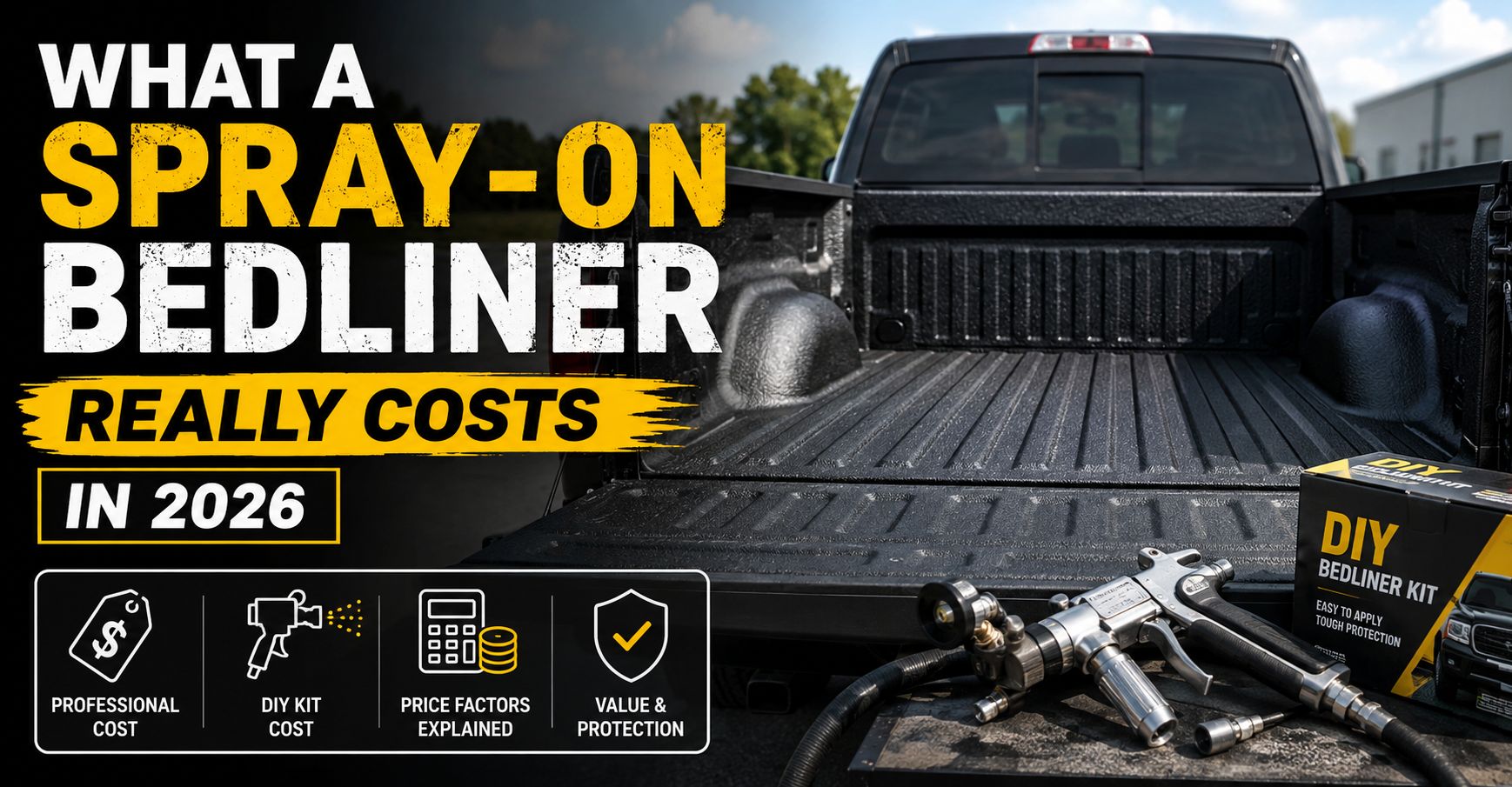
What a Spray-On Bedliner Really Costs in 2026
How much does a spray-on bedliner cost? sounds like a simple question, but the honest answer is “it depends on more than most people expect.” Truck size, the shop doing the work, the condition of the bed before spraying, and whether you go professional or DIY can all move the price by hundreds of dollars in either direction.
This guide breaks down what actually drives spray-on bedliner pricing in 2026, so you can walk into a shop, or into a DIY kit purchase, with a realistic number in mind instead of just the lowest price you saw advertised.
Understanding the Basics
A spray-on bedliner is a coating, typically polyurea or a polyurethane blend, applied directly to a truck bed to protect it from scratches, dents, moisture, and corrosion. It can be applied by a professional shop using plural-component spray equipment, or by a vehicle owner using a DIY roll-on or spray kit purchased online or at an auto parts store.
The core cost difference between the two comes down to equipment, labor, and consistency. Professional shops use equipment capable of a more uniform, textured finish and typically back the work with a warranty. DIY kits trade some of that consistency and warranty coverage for a lower price and the ability to do the work on your own schedule.
What Drives the Price Up or Down
Several factors influence the final number more than people expect going in:
- Truck bed size. A full-size truck bed costs more to coat than a compact or mid-size bed simply because there is more surface area to cover.
- Bed condition. Existing rust, dents, or a previous coating that needs to be stripped adds labor time and cost before the new coating even goes on.
- Coating type and thickness. Some shops offer tiered options, with thicker or multi-layer applications priced higher than a standard single-layer job.
- Shop location and demand. Pricing varies by region and by how busy a given shop is, the same way any service-based pricing does.
- Add-ons. UV-resistant topcoats, extended warranties, and coverage beyond the bed itself, such as rocker panels or a tailgate, all add to the base price.
Professional Application Cost
Professional spray-on bedliner jobs commonly fall in a broad range depending on the factors above, often somewhere between a few hundred dollars for a basic job on a smaller truck and well over a thousand dollars for a full-size bed with rust repair, a premium coating, or extended coverage areas. Getting more than one quote is worth the extra half hour, since pricing for what looks like the same job can vary noticeably between shops in the same city.
Ask specifically what is included: is bed removal part of the quote, is there a warranty, and does the price cover just the bed floor and walls or additional surfaces as well. Two quotes that look close on paper can represent very different scopes of work.
DIY Kit Cost
DIY bedliner kits are generally priced well below a professional job, which is the main appeal for budget-conscious owners or anyone comfortable doing the prep work themselves. The tradeoff is time, effort, and a finish that is typically less consistent than a professionally sprayed job, since most kits are roll-on or basic spray applications rather than the plural-component equipment a shop uses.
Kit cost alone does not tell the whole story either. Sandpaper, degreaser, painter’s tape, and any rust treatment needed before application are usually separate purchases, and a rushed or under-prepped DIY job often needs to be redone sooner than a professional one would.
Professional vs. DIY Cost Comparison
| Factor | Professional Application | DIY Kit |
|---|---|---|
| Upfront cost | Higher | Lower |
| Finish consistency | Generally more uniform | Varies with skill and prep |
| Time required | Usually same day or next day | A full day or weekend, including cure time |
| Warranty | Often included | Rarely included |
| Equipment needed | Provided by the shop | Purchased or included in kit, lower grade |
| Redo risk | Lower with a reputable shop | Higher if prep or application is rushed |
| Best for | Owners prioritizing finish and warranty | Owners comfortable with hands-on work and a tighter budget |
Hidden Costs People Forget to Budget For
- Rust or dent repair discovered once the old finish or debris is removed
- Removing and reinstalling a bed liner, toolbox, or tie-down system that was already in place
- A rental vehicle or alternate transportation if the truck is out of service for the job
- Redoing a DIY job that did not cure properly or was applied over an improperly prepped surface
Which Option Fits Which Owner
Professional application tends to make sense for:
- Owners who want a warranty and a consistent, shop-quality finish
- Work trucks that need to look presentable for a business
- Beds with existing rust or damage that need proper repair before coating
A DIY kit tends to make sense for:
- Owners on a tight budget who are comfortable with hands-on prep and application
- Lighter-use vehicles where a small amount of finish inconsistency is not a dealbreaker
- Anyone wanting to test a bedliner before committing to a full professional job later
For a closer look at how the application method itself affects durability and coverage, our comparison of spraying versus rolling goes into more depth on adhesion and finish quality between the two.
Things to Consider Before You Book or Buy
- Does the quote include bed removal, or will that be an added cost?
- What is actually covered by the warranty, and for how long?
- Is the bed in good enough condition to coat as-is, or does it need rust or dent repair first?
- If going DIY, do you have the tools, space, and time to prep and apply properly, including cure time?
- Have you compared more than one quote or kit to see what is a fair price for the scope of work in your area?
If you are still deciding between a sprayed-in and rolled-on finish before pricing shops, our guide on what bedliners are made of and how they work covers the chemical and application basics that affect both cost and durability.
Maintenance and Long-Term Value
A properly applied bedliner, professional or DIY, needs relatively little upkeep: regular cleaning and prompt attention to any deep gouges or exposed metal. The bigger factor in long-term value is usually the quality of the original application rather than ongoing maintenance. A rushed job, DIY or professional, tends to show wear, staining, or peeling sooner than one that was properly prepped and cured. If you are choosing a shop rather than doing it yourself, our guide on selecting a qualified truck bed liner company covers what to check before booking.
Frequently Asked Questions
Is a spray-on bedliner worth the cost?
For most truck owners who use their bed regularly for cargo, tools, or work purposes, the protection against rust, dents, and moisture damage tends to justify the cost over the life of the truck. For light or occasional use, a lower-cost option may be enough.
Why do bedliner quotes vary so much between shops?
Pricing differences usually come down to coating type, prep work included, warranty coverage, and regional cost differences, not just markup. Comparing what is actually included in each quote explains most of the price gap.
Can I do a DIY bedliner over an existing coating?
Generally, an old coating needs to be properly prepped or removed first for a new one to adhere well. Spraying over a failing or peeling existing coating usually leads to a shorter-lived result.
How long does a spray-on bedliner take to cure?
Cure times vary by product, but many spray-on bedliners are dry to the touch within a short window and fully cured within about a day. Always follow the specific product’s instructions rather than a general rule of thumb.
Does a more expensive bedliner always mean better quality?
Not necessarily. Price often reflects prep work, warranty, and shop reputation as much as the coating itself. A mid-priced job from a reputable shop can outperform a premium-priced job with rushed prep.
Conclusion
The real cost of a spray-on bedliner depends less on a single sticker price and more on what is included: prep work, coating quality, warranty, and how the job is actually done. Whether you go professional or DIY, getting clear on scope before committing, and budgeting for the hidden costs that tend to surface once the old finish comes off, is what separates a bedliner that holds up for years from one that needs to be redone within a season.
0 comments