Why Black Bedliners Fade and How Aliphatic Topcoats Stop It
On this page
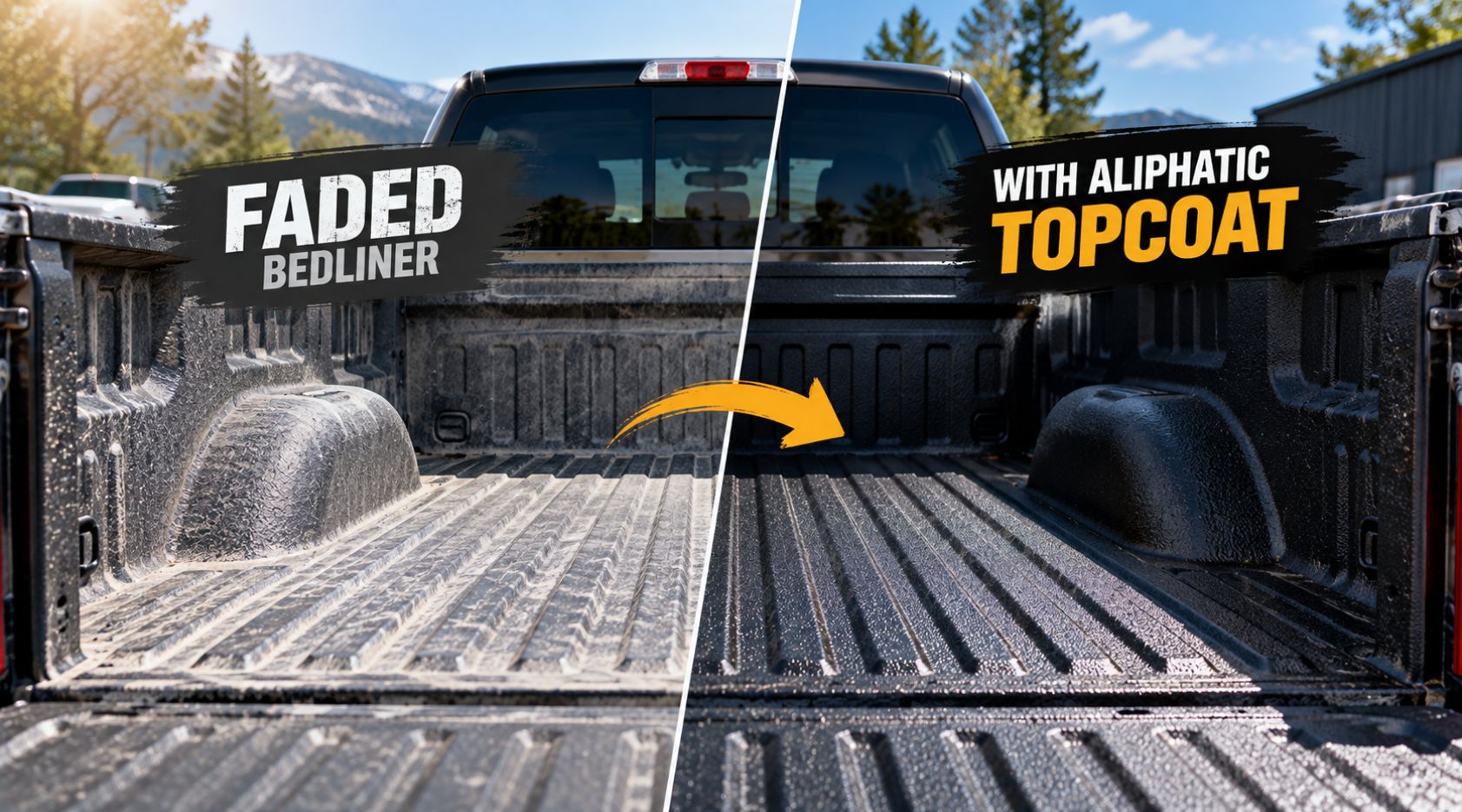
Drive past a used truck lot and you’ll spot it immediately: a bedliner that used to be deep, glossy black now looks gray and chalky, almost dusty to the touch even after a wash. UV fading bedliner complaints are one of the most common things truck owners bring up a year or two after getting a spray-in liner, and almost every time, the real story isn’t a bad product so much as a missing step in how it was built. Black shows this kind of fading harder than any other color, which is exactly why understanding what’s actually happening at the chemical level, and why an aliphatic topcoat matters so much, is worth a few minutes before your next liner job.
What Causes UV Fading Bedliner Problems in the First Place
Most spray-in bedliners are built on aromatic polyurea or polyurethane chemistry. Aromatic isocyanates, the reactive component behind these coatings, contain a benzene ring structure that gives the cured material excellent mechanical toughness, fast cure, and lower cost compared to alternatives. That same ring structure, though, has a weakness: it absorbs ultraviolet light readily, and that absorbed energy drives a chemical breakdown process called photooxidation. Over time, UV exposure breaks bonds at the surface of the cured coating, and the byproducts of that breakdown show up as a dull, chalky, often grayish film sitting on top of what used to be a rich, dark finish.
This is chalking, and it’s not really fading in the sense of the pigment itself disappearing. The pigment is still there underneath. What’s actually happening is that the resin binding that pigment at the surface has degraded into a loose, powdery layer that scatters light differently than the smooth, glossy resin did when it was new. Rub a chalking bedliner with your finger and you’ll usually see a gray or white residue transfer onto your skin, which is a pretty reliable field test for exactly this kind of UV degradation.
Coatingpedia’s reference on chalking and fading explains how binder erosion, pigment changes and gloss loss differ, and what to check before recoating a weathered surface.
Why Black Shows It Worse Than Any Other Color
Chalking happens on every color of aromatic coating exposed to UV, but black makes it dramatically more visible. A chalky, degraded surface layer scatters light more than a smooth, cured surface, which means it reflects more light back regardless of the underlying pigment. On a lighter color, that added light scattering barely changes the overall appearance. On black, where the whole visual effect depends on the surface absorbing most light rather than reflecting it, even a thin chalky layer creates a stark, obvious contrast against the rich black underneath. That’s why a faded black bedliner looks so much more dramatically different from new than a faded tan or gray one does, even when the underlying chemical degradation is happening at a similar rate.
Aromatic vs. Aliphatic Chemistry
The fix for this problem isn’t a different pigment. It’s a different chemistry, at least at the surface. Aliphatic isocyanates lack the benzene ring structure that makes aromatic chemistry so vulnerable to UV. Without that ring to absorb ultraviolet energy and kick off photooxidation, aliphatic coatings resist chalking and color change dramatically better over the same UV exposure period. The tradeoff is cost and, in some formulations, certain mechanical properties, which is part of why aliphatic chemistry is rarely used as the entire bedliner system from base to surface.
The practical solution the industry settled on years ago is layering: an aromatic base coat handles the heavy lifting, impact resistance, abrasion resistance, and the bulk of the coating’s mechanical toughness, sprayed thick and fast and at a lower cost than an all-aliphatic system would allow. Then a thinner aliphatic topcoat goes over that base, acting as a UV-stable shield that keeps ultraviolet light from ever reaching the aromatic layer underneath in meaningful quantities. The base coat stays protected and structurally sound. The topcoat, being aliphatic, resists chalking and color shift far longer, keeping the whole system looking like new well past the point an unprotected aromatic surface would already be gray and dusty.
Comparing Aromatic and Aliphatic Coatings
| Factor | Aromatic Coating | Aliphatic Coating |
|---|---|---|
| UV resistance | Poor, chalks and fades under sustained exposure | Strong, resists chalking and color change |
| Mechanical toughness | Excellent, high impact and abrasion resistance | Good, though some formulations trade off slightly |
| Typical cost | Lower | Higher |
| Cure speed | Fast | Varies, generally still workable for topcoat use |
| Common role in a bedliner system | Base coat, structural layer | UV-protective topcoat |
| Appearance retention outdoors | Degrades visibly within one to two years of sun exposure without protection | Maintains gloss and color much longer |
What This Means for Your Bedliner
Not every bedliner job on the market includes a proper aliphatic topcoat, and this is where a lot of the UV fading bedliner complaints actually originate. Some lower-cost spray jobs, and a fair number of DIY kits, apply only a single aromatic coat without any UV-stable layer on top, because it’s cheaper and faster to do the job that way. The liner looks great on day one. The problems show up eighteen months to two years later, right around the time an unprotected aromatic surface typically starts visibly chalking under regular sun exposure. Our piece on how long a spray-in bedliner lasts and what shortens it covers UV exposure as one of several factors that separate a liner that still looks good after years of service from one that’s visibly degraded much sooner.
If you’re getting a bedliner sprayed, or you already have one and you’re trying to figure out why it’s fading, the single most useful question to ask is whether the system includes a dedicated aliphatic topcoat, and if so, what that topcoat actually is. A vague answer, or a shop that isn’t sure what chemistry their topcoat uses, is worth treating as a red flag if long-term color retention matters to you.
Things to Consider
Ask specifically about the topcoat chemistry, not just the base coat. A shop advertising a “premium polyurea bedliner” might still be applying only an aromatic system without any UV-protective layer. The topcoat is where the UV resistance actually comes from, so that’s the specific detail worth confirming before the job starts.
Consider your actual sun exposure. A truck parked in a garage most of the time faces a very different UV exposure timeline than one parked outdoors in a sunny climate year-round. Both benefit from an aliphatic topcoat, but the urgency and visible timeline for chalking differ significantly based on how much direct sun the bed actually sees.
Understand that chalking is a surface phenomenon, not necessarily a structural failure. A chalked bedliner that hasn’t been recoated is usually still functioning fine underneath in terms of impact and abrasion resistance. The chalking is cosmetic, though a heavily degraded surface can eventually become more porous and slightly more prone to staining and dirt retention.
Ask whether a topcoat refresh is possible without a full strip and recoat. In many cases, a chalked aromatic base coat can be cleaned, lightly prepped, and recoated with a fresh aliphatic topcoat without needing to strip the entire liner down to bare metal, which is a significantly less expensive fix than a full redo.
Factor color choice into your expectations, not just your decision on topcoat. Black will always show any degree of surface chalking more dramatically than a mid-tone gray or tan. If color retention over many years matters more to you than the classic black look, a lighter color with the same aliphatic topcoat will show less visible change over time even under identical UV exposure.
Maintenance to Slow the Process
Regular washing removes surface grime and can slightly reduce how quickly a chalking layer builds visible dullness, though it won’t reverse UV degradation that’s already occurred. Some truck owners apply a UV-protectant dressing formulated for exterior coatings periodically, which can add a modest, temporary layer of additional protection and gloss, though it’s not a substitute for a properly applied aliphatic topcoat in the first place. For a bedliner already showing early chalking, addressing it sooner with a topcoat refresh tends to be a smaller, cheaper job than waiting until the degradation is severe enough to require a full strip and recoat.
Regional and Seasonal Differences Worth Knowing
UV exposure isn’t uniform across the country, and it isn’t uniform across the year either. A truck running through a high-altitude or southern climate with intense year-round sun sees meaningfully more cumulative UV exposure over the same calendar period than one in a cloudier, more northern region, and that difference shows up directly in how quickly chalking becomes visible on an unprotected or under-protected coating. Elevation matters too, since UV intensity increases with altitude, which is part of why trucks working in mountain regions sometimes show fading faster than owners expect based on how mild the visible sun exposure seemed on any given day.
Seasonal parking habits matter as well. A truck that spends summer months parked outdoors in direct sun for long stretches, even if it sits in a garage the rest of the year, accumulates a disproportionate share of its annual UV exposure during that stretch. None of this changes the underlying fix, a proper aliphatic topcoat is still the right answer regardless of climate, but it does mean owners in high-UV regions have less margin for a marginal or missing topcoat before chalking becomes noticeable, and it’s worth factoring that into expectations when comparing notes with someone whose truck lives in a very different climate.
Frequently Asked Questions
Why does my black bedliner look gray after a year or two?
This is almost always UV-driven chalking of an aromatic coating that either lacks a UV-protective topcoat or has an aliphatic topcoat that’s already worn through. The degraded surface layer scatters light differently than fresh, cured resin, which shows up as a dusty, grayish appearance, especially visible on black.
Does every spray-in bedliner include a UV-resistant topcoat?
No. Some lower-cost jobs and many DIY kits apply only a single aromatic coat without a dedicated aliphatic topcoat, which is a major reason those liners chalk and fade faster than a properly layered professional system.
Can a faded, chalky bedliner be fixed without redoing the whole liner?
Often, yes. If the base coat underneath is still structurally sound, cleaning and lightly prepping the surface before applying a fresh aliphatic topcoat can restore appearance without a full strip and recoat.
Is aliphatic coating better than aromatic coating overall?
Neither is universally better. Aromatic chemistry offers superior toughness and lower cost, which is why it remains the standard base coat. Aliphatic chemistry offers superior UV resistance, which is why it’s the standard choice for the protective topcoat layer, not usually the entire system.
Do lighter-colored bedliners fade less than black ones?
The underlying UV degradation happens at a similar rate regardless of color, but the visible effect is far less dramatic on lighter colors, since the light-scattering chalk layer contrasts less against a lighter base color than it does against black.
Conclusion
UV fading bedliner problems come down to straightforward chemistry: the aromatic resin systems that give spray-in liners their toughness are genuinely vulnerable to ultraviolet breakdown, and black makes that breakdown impossible to miss. A properly applied aliphatic topcoat solves the problem by shielding the aromatic base from UV exposure in the first place, keeping the whole system looking close to new for years longer than an unprotected coating ever would. Whether you’re getting a new liner sprayed or trying to figure out why an existing one is already chalking, the topcoat chemistry is the detail that actually determines how well that black finish holds up under the sun.