
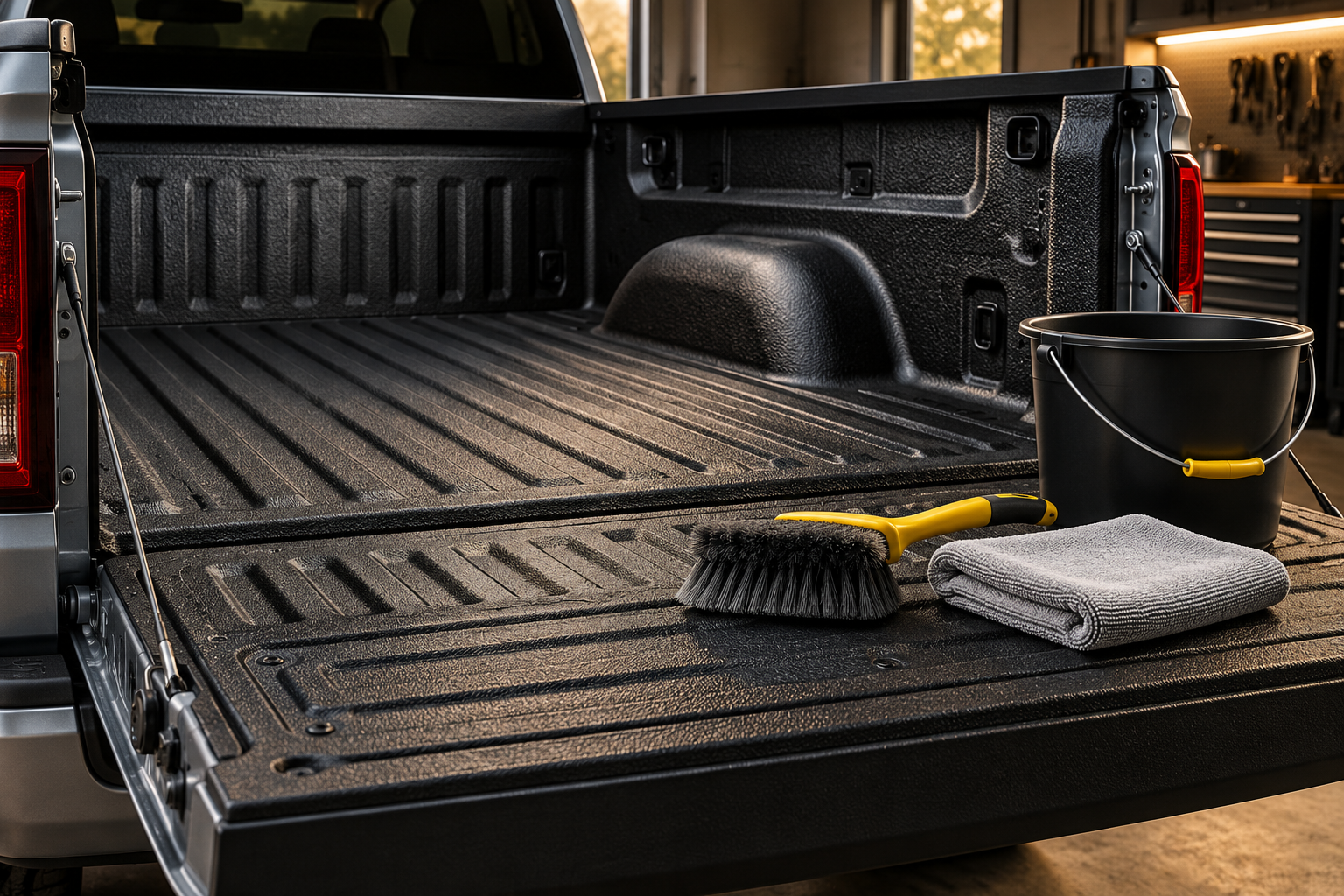
Before Cleaning a Spray-In Bedliner, Identify the Coating
A muddy truck bed invites a quick wash, but a spray-in liner is not a single material with one universal cleaning recipe. The sensible first step is identifying the coating and finding its care instructions. That matters especially on a used truck, where the product name and installation history may be missing.
This researched guide explains how to turn those instructions into a practical cleaning plan. It is not a hands-on comparison of cleaners, a coating inspection or a substitute for the product manufacturer’s directions.
Identify what is actually on the bed
Look for an installation invoice, warranty registration or other record naming the coating system. Include any separate topcoat or later repair. A brand sticker may be a useful lead, but ask the installer to confirm what was applied before choosing a cleaner from a similarly named product page.
For a factory-applied liner, start with the owner’s manual for the truck’s model year. For an aftermarket installation, ask the applicator for current written care instructions. If records are unavailable, send the shop clear photographs and explain what you know. Do not try to identify the chemistry by scraping the coating or applying a solvent.
Save the instructions with the truck’s service records. Note the source and date so a future owner, family member or detailing shop can find the same guidance.
Notice where manufacturers’ instructions differ
The 2022 Ram 2500/3500 owner’s manual describes mild soap and water with a soft cloth or brush for its spray-on bedliner. It also warns that certain protectant products can make the surface slippery. Those directions belong to that vehicle’s liner; they do not establish compatibility with every aftermarket coating.
LINE-X’s bedliner maintenance article, by comparison, discusses soap, water and a stiff brush, and gives a pressure-washing limit and nozzle guidance for its coating. The difference in brush advice alone shows why a generic online checklist should not overrule the instructions for your installation.
When two sources disagree, first check whether they describe the same product, topcoat and application. Ask the manufacturer or installer to resolve the conflict rather than combining the most aggressive steps from both.
Make a short care card before washing
Keep a simple note with the information a person cleaning the truck actually needs:
- The coating name, topcoat if present and installer contact.
- The approved cleaner, dilution and rinsing directions, where specified.
- The permitted brush or cloth and any prohibited products.
- Whether pressure washing is allowed, including the applicable nozzle, pressure and distance instructions.
- Any restrictions for a new application or recently repaired area.
Leave unanswered items marked as questions. An empty box is more useful than an invented setting. If a detailing shop will do the work, share the care card in advance and ask it to use the confirmed method.
Separate ordinary dirt from a coating concern
Before cleaning, photograph anything unusual while its location and appearance are clear. Include an overall view and a closer image. Record whether you noticed the change after carrying particular cargo, after previous cleaning or simply during an ordinary check.
A stain, fading, a scratch and an edge that is lifting are different observations. Avoid treating every visible change as dirt that requires stronger scrubbing. Ask the installer to assess uncertain damage before experimenting with solvents, abrasives or a spot-repair product.
For an unknown chemical spill, stop and obtain handling guidance appropriate to the material and coating. A routine washing guide is not a spill-response procedure. Do not improvise a chemical mixture to remove it.
Do not add a shine product by habit
A product intended for tires, trim or another vehicle surface is not automatically suitable for a truck bed. A familiar brand name is not evidence that a particular dressing is approved for the liner. Ask about the exact product rather than requesting a general “protectant.”
Likewise, do not promise yourself that washing or conditioning will restore every change in appearance. The Ram manual describes weathering-related fading and the possibility of damage from sharp or heavy cargo. Cleaning and repair are separate decisions; the latter may require an applicator’s assessment.
Keep the useful record, then keep it simple
After the approved cleaning process, record the date and products used, plus any concern you referred to the installer. A few consistent photographs can help explain a later question without claiming to prove adhesion, thickness or remaining service life.
If the liner is newly installed, our bedliner handover checklist covers the records worth collecting at pickup. For ongoing care, the goal is straightforward: know the coating, follow its directions and resolve uncertainty before increasing cleaning intensity.
0 comments