
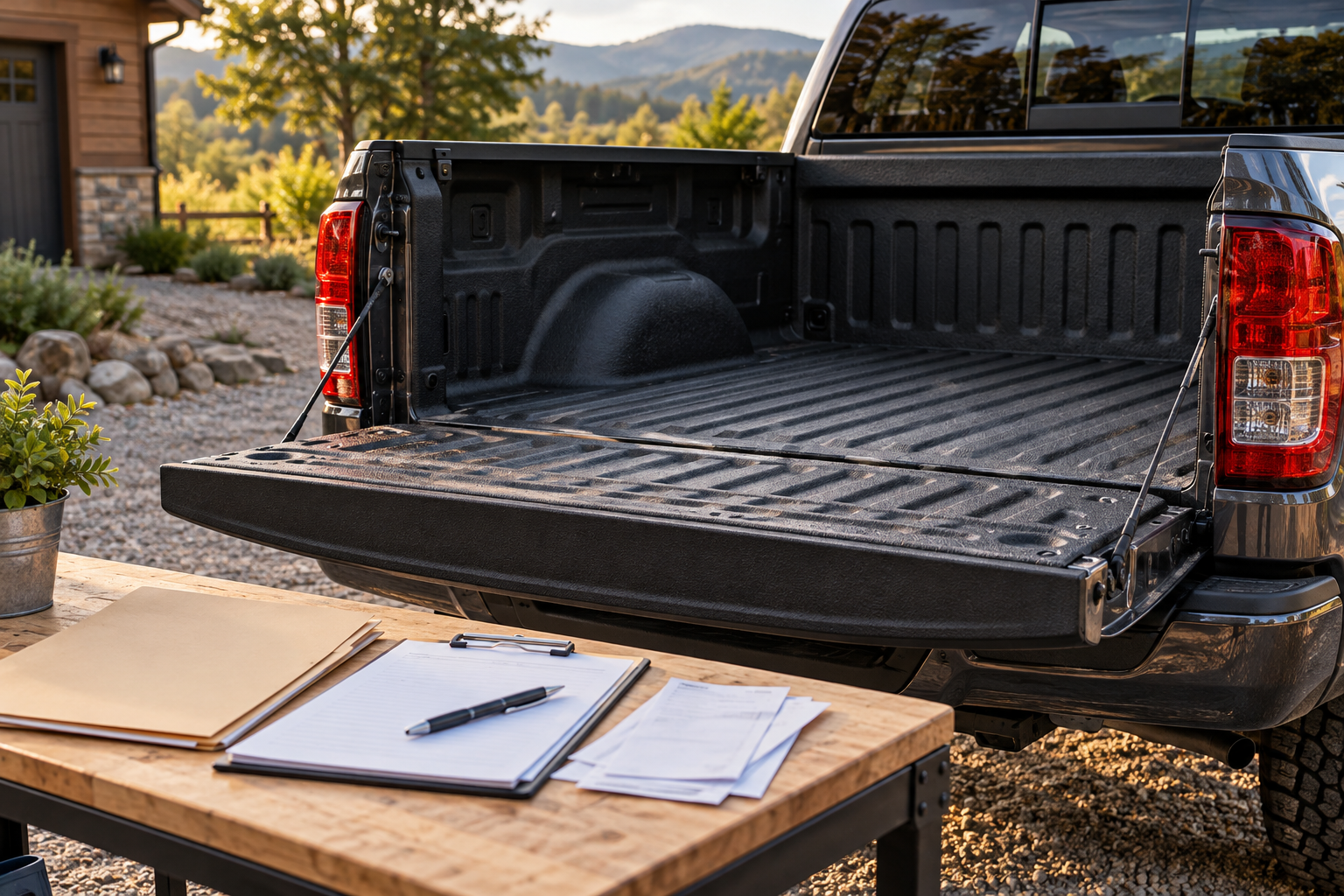
Buying a Used Truck With a Spray-In Bedliner: Verify the Warranty Separately
A spray-in bedliner can be a useful feature on a used truck, but the coating and its warranty are separate things to verify. “Lifetime warranty” in a vehicle advertisement does not tell you who holds the coverage, which product was installed or whether anything transfers when the truck changes hands.
Before assigning value to that claim, gather the paperwork and ask the named warranty issuer to confirm the terms for your situation. This is a purchase-record checklist, not legal advice or a determination that a particular repair will be covered.
Identify what was installed
Ask for the original installation invoice, product name, installation date and applicator’s business details. A logo badge can be a clue, but it is not a substitute for records linking the job to the vehicle. If the seller cannot identify the coating, record it as unknown rather than choosing the most familiar brand from its appearance.
Keep the product name precise. The same business may offer several coating systems and other accessories. A tonneau-cover warranty, a coating warranty and a separate shop promise should not be collapsed into one line on your purchase checklist.
Read the original-purchaser language
As a concrete example, the current LINE-X spray-on truck bedliner warranty states that it applies to the original purchaser and is not transferable. Its described scope also includes conditions concerning the original factory finish, original-equipment truck beds and personal non-commercial use. The page asks for purchase documentation and distinguishes possible additional local-franchise coverage.
That example is a reason to check the actual policy, not a claim that every bedliner has identical terms. Other products or written shop arrangements may differ. Ask the issuer which document applies to the installation you are considering and whether it provides any coverage to a later owner.
Save the answer with the document it references. A useful answer identifies the truck or job, the relevant coverage and any conditions. A general sales statement about the brand may leave the transfer question unanswered.
Separate condition from coverage
Photograph the bed as it is offered for sale, with the seller’s permission. Include an overall view and closer views of areas that concern you, such as edges, the tailgate and visible damage. Do not cut, peel or scrape the coating to find out what is underneath.
Describe observations neutrally: location, appearance and whether an area is hidden by equipment. Avoid diagnosing adhesion failure or corrosion from a photograph alone. If the condition matters to your decision, ask a qualified applicator to inspect it and explain the proposed work.
Keep any repair estimate separate from the warranty question. A shop may be able to quote a repair even when coverage is absent or unconfirmed. Conversely, the existence of paperwork does not by itself establish the cause of a defect or approval of a claim.
Use a three-part purchase note
- Known: the product, installer and documents you have actually verified.
- Unconfirmed: missing records, inaccessible areas and unanswered coverage questions.
- Next step: the person or business who can resolve each item before purchase.
For example, “installation invoice supplied; transfer eligibility awaiting issuer confirmation” is clearer than “warranty included.” If no transfer is available, record that plainly and evaluate the truck on its actual condition and the other terms of the purchase.
Keep the records after the sale
If you proceed, store the installation documents, relevant written responses and your purchase-day photos together. Also save any product-specific care instructions the installer can provide. That makes a later cleaning or repair conversation more concrete, even where no warranty transfers.
Before cleaning an unfamiliar liner, use the separate guide to identifying the coating. A used-truck handover is a good moment to collect those details while the previous owner still has access to their records.
The key question is simple: what coverage, if any, will apply to you after the sale? Resolve it with the issuer and the relevant written policy, rather than letting a durable-looking surface answer a paperwork question.
0 comments