Buying a Tonneau Cover for a Truck With a Spray-In Bedliner
A truck that already has a spray-in bedliner may still have suitable tonneau-cover options. The useful question is which cover fits that particular truck, coating coverage and accessory arrangement. A general compatibility statement cannot settle every mounting or clearance detail.
For example, Peragon’s compatibility FAQ says spray-in liners, including applications over the rails, are compatible with its covers. That is manufacturer-specific guidance. Before ordering any cover, use its current fitment information and installation documents to check the complete setup.
Identify the truck and the exact cover
Start a short fitment note with the truck’s model year, make, model, bed length and any bed-specific options. Record factory cargo tracks, bedside storage boxes, bed-rail caps and the tailgate configuration. Describe the actual equipment rather than relying on a trim-level name to communicate everything.
Run those details through the cover manufacturer’s vehicle selector. Keep the resulting part number, cover generation and any fitment qualifications together. A product-family name alone leaves room for confusion when several truck applications or revisions appear in search results.
Ask for the installation guide and any vehicle-specific supplement for that exact part number. If the bed-length designation is unclear, ask the manufacturer where to measure and how to match the result to its listing. Do not choose the nearest-looking cover from its overall dimensions.
The distinction between general and vehicle-specific instructions matters. BAK publishes a separate 2019-and-newer RamBox installation sheet describing how its side rails fit into the truck’s cargo rails. A truck’s existing rail system can therefore be part of the cover’s mounting arrangement, rather than an incidental detail.
Locate the surfaces the cover needs
Compare the proposed cover’s mounting drawings with the bed as it sits today. Note where coating extends onto the rail tops, inner rail lips, front bed wall and tailgate. Also identify separate plastic caps or panels. Describe each material separately when asking about fit.
In the BAKFlip standard installation sheet, rail position and clamp engagement are explicit requirements. It calls for rails square to the truck bed rails so the rear latch engages properly, and illustrates correct and incorrect clamp engagement. This makes the contact area worth checking before buying.
Take an overall photograph of each side and closer views of the proposed mounting areas without dismantling the bed. Ask whether the illustrated hardware can seat as specified on those surfaces. A photograph cannot establish coating thickness or certify fit, but it can reveal a question that a broad “spray-in compatible” listing leaves unanswered.
Check accessories as one combination
Include the model numbers and mounting methods of any rack, toolbox, bed extender or cargo-management system you intend to keep. Two products that each fit the truck separately may still need the same mounting space.
Peragon’s accessory compatibility guidance gives a concrete example: its retractable cover needs specified rail-contact areas, and ladder racks that clamp to the inside edge conflict with that arrangement. The manufacturer also cautions that aftermarket accessory fit varies by truck model.
Ask both suppliers to evaluate the exact combination. If an approved adapter is required, obtain its part number and matching instructions before adding it to the order. Do not translate a successful installation on a different truck into a confirmed fit for yours.
Check the space needed to open it
Consider the cover in its closed, moving and fully open positions. Ask where the panels, rolled assembly or storage housing will sit, and which parts must remain reachable. Include the release mechanism, retaining straps or supports, cargo cleats and any equipment you regularly access.
Peragon’s FAQ explains that its retracting panels need room to fold into the front of the bed; conventional toolboxes beside the cab can occupy that same space. This is a useful reminder to check the whole opening path, even when the closed cover would clear the equipment.
Tailgate operation deserves a specific question, too. The BAKFlip installation sheet includes a check for powered tailgates with the cover closed. Ask the selected cover’s manufacturer about every tailgate mode you use. If the cover has drain tubes, confirm their approved routing for the truck before installation is booked.
Get a usable answer before ordering
Send one concise inquiry containing the truck details, proposed cover part number, liner coverage, accessory list and relevant photographs. Ask the manufacturer to confirm:
- Whether that exact cover and mounting kit suit the truck as currently equipped.
- Whether the coated contact surfaces need an installer assessment.
- Which existing accessories remain usable and which approved adapters are required.
- Which installation document and supplements apply.
If the response suggests altering the coating or hardware, pause the purchase and have the cover supplier and liner installer agree on the work first. Avoid improvising clamp positions, cutting the liner or drilling to resolve an uncertain fit.
If the liner was installed recently, collect its product-specific return-to-use instructions during the bedliner handover before booking accessory work. Include any restrictions for a separate topcoat.
The goal is a clear decision: the documented combination fits as supplied, it requires a specifically approved arrangement, or it remains unconfirmed. Resolve that last category before paying for the cover.
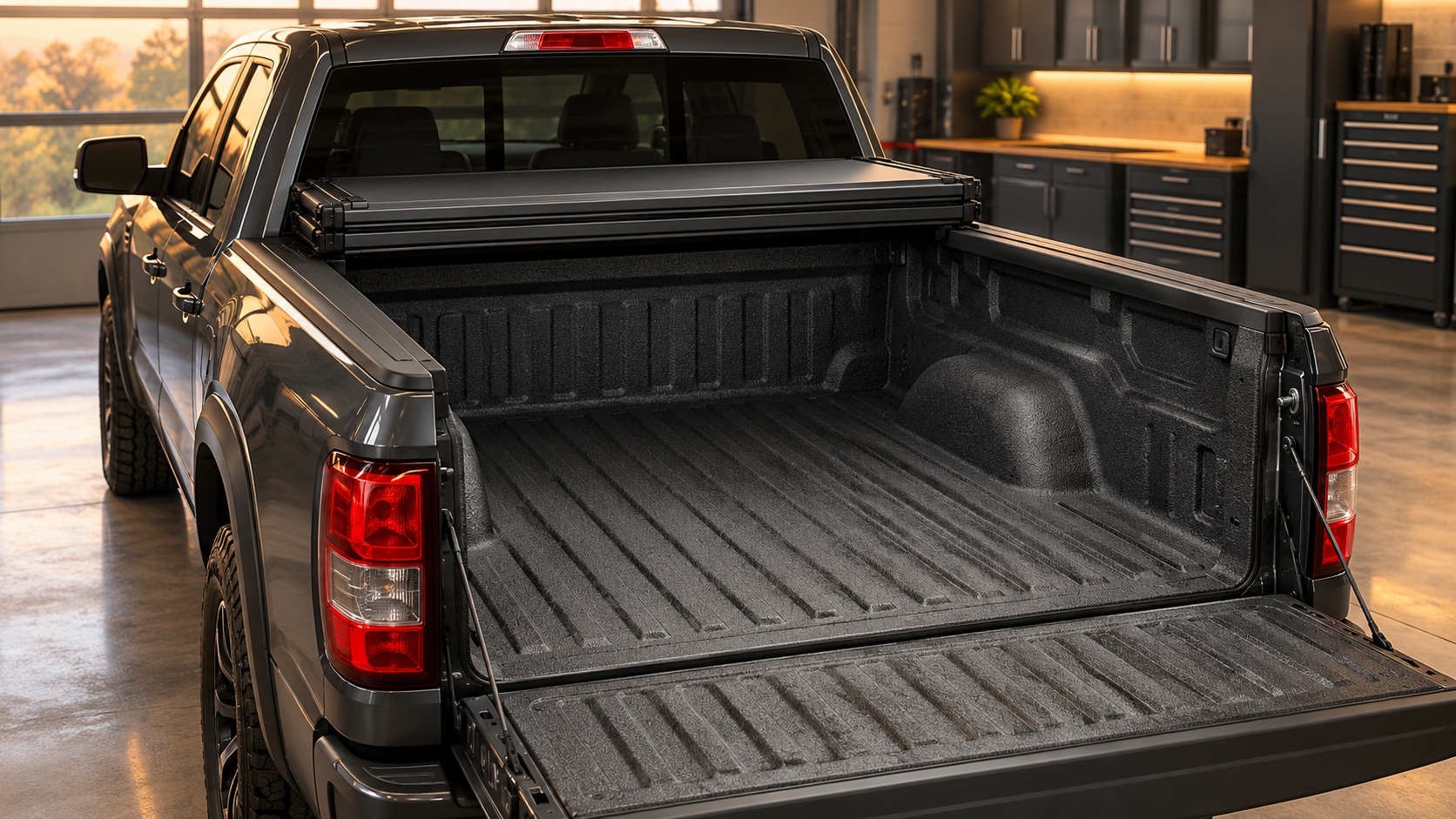
Researched buying guidance. Follow the current instructions for your exact truck and cover. Cover: original AI-generated conceptual illustration, not a fitment diagram.
0 comments