Trailer Floor Coating: Protecting Floors and Ramps for Load Abuse
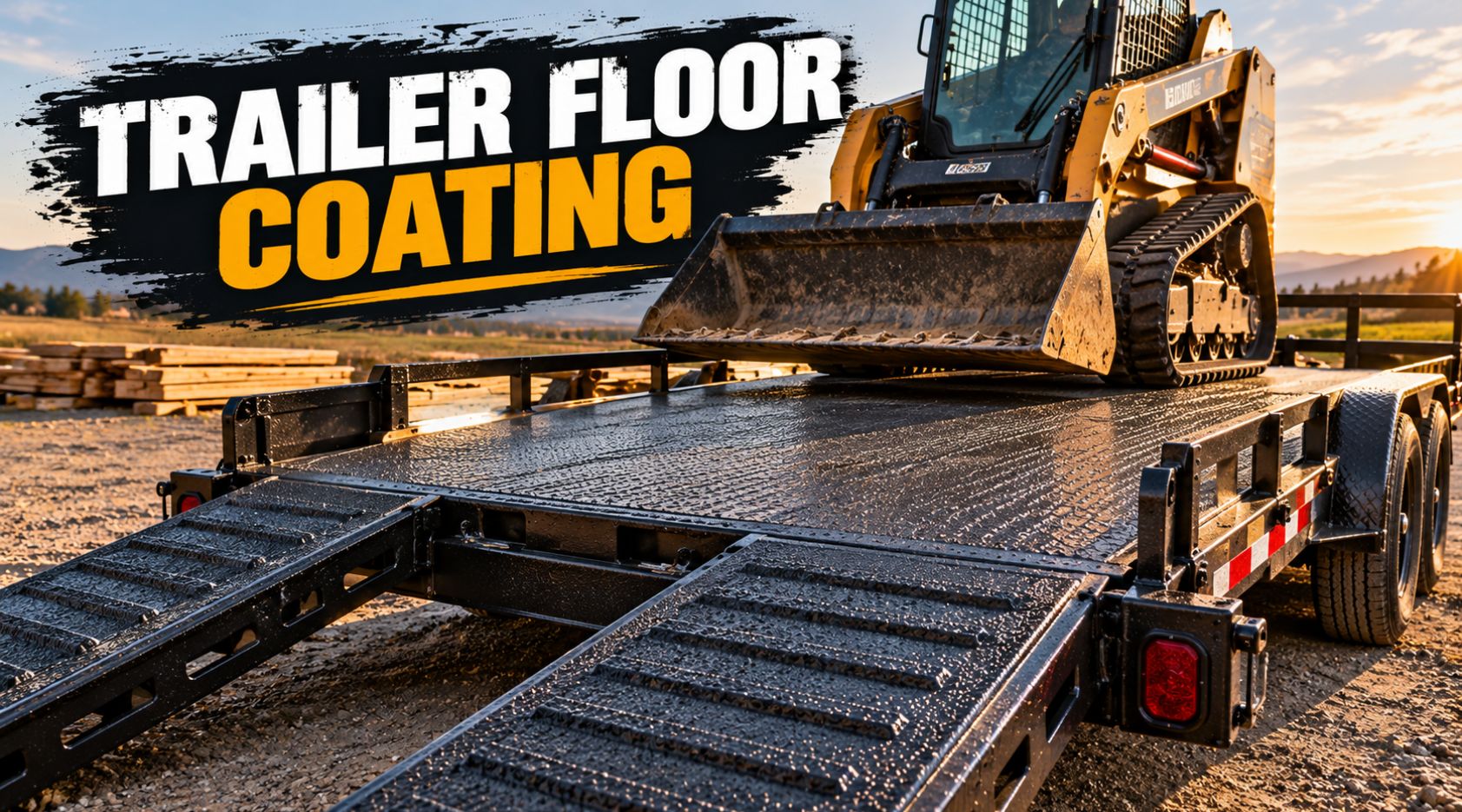
A truck bed takes a beating, but a trailer floor often has it worse. Car haulers and equipment trailers deal with the full weight of vehicles and machinery rolling directly across the deck, ramps absorb the hardest impact of the whole setup every single time something drives on or off, and livestock trailers add manure and urine into a mix that already includes moisture, mud, and constant scraping from hooves or boots. Trailer floor coating exists for exactly this reason: the floor isn’t just along for the ride the way a truck bed liner sometimes feels like it is. It’s structural, it’s safety-critical on a ramp, and when it fails, the fix usually isn’t cheap or quick.
Why Trailer Floor Coating Matters for Load Abuse
Think about what actually happens every time a trailer gets loaded. Tires scuff and spin slightly as a vehicle finds traction climbing the ramp. Chains drag across the deck when equipment gets winched into position. Jack stands and equipment feet concentrate enormous point loads onto a small area of floor. Oil, hydraulic fluid, and whatever the cargo happens to be dripping all find their way onto the surface sooner or later. None of this is occasional wear and tear. It’s the normal, expected use case for the trailer, happening every single trip.
A properly applied coating addresses several of these problems at once: abrasion resistance against the scuffing and dragging, impact resistance against concentrated point loads, and a protective barrier against the fluids and moisture that would otherwise work on bare wood or steel underneath. On a ramp specifically, there’s a safety dimension too, since a coating with the right texture dramatically improves footing and traction compared to bare, worn metal or weathered wood.
What Actually Wears Out First
Wood deck trailers fail predictably at the seams, around bolt holes, and anywhere moisture can wick into exposed grain. A wood deck that looks solid on the surface can be quietly rotting from underneath if water has been getting into those entry points for a season or two without anyone noticing. Splintering from heavy equipment traffic is the more visible problem, and it tends to get worse quickly once it starts, since a splintered area catches more debris and holds more moisture than a smooth surface would.
Diamond plate aluminum and steel floors wear differently. The raised diamond pattern that provides traction when new gradually wears smooth under repeated traffic, especially along the specific paths where tires and equipment consistently travel. On steel floors, corrosion is the bigger long-term threat, particularly where road salt, moisture, and scratched-through paint combine to start rust that spreads underneath the surrounding finish before it’s visually obvious.
Ramps, whatever they’re made of, take the most concentrated abuse on the whole trailer. Every load cycle puts the full weight of a vehicle or piece of equipment through a relatively small, often inclined surface, and that combination of weight and angle is exactly where traction loss becomes a real safety issue, not just a cosmetic one.
Comparing Protection Options
| Factor | Bare Wood or Metal | Standard Paint | Spray-Applied Coating |
|---|---|---|---|
| Abrasion resistance | Low | Moderate, chips and wears through | High |
| Moisture and corrosion protection | Low | Moderate, prone to chipping and undercutting | High when properly applied |
| Traction and slip resistance | Poor, especially when wet or worn | Poor unless textured | Good, texture can be built in |
| Impact resistance | Low | Low to moderate | High, flexible film absorbs point loads |
| Chemical resistance | Low | Varies, often limited | Good, depends on formulation |
| Repairability | Not applicable | Chips and touch-ups are visible | Can often be patched or recoated |
Matching the Coating to the Trailer’s Actual Job
Livestock trailers deal with a chemical exposure problem most other trailers don’t: manure and urine sitting on the floor between cleanings, which is both corrosive to bare metal and genuinely unpleasant to deal with if the floor isn’t sealed properly. A coating with strong chemical resistance and a surface that doesn’t trap waste in textured crevices makes cleanout meaningfully easier, and protects the floor from the kind of slow chemical degradation that bare wood or unprotected steel sees over repeated exposure.
Car haulers and equipment trailers benefit most from impact and point-load resistance, since jack stands, wheel chocks, and heavy equipment feet concentrate enormous force onto small areas of the deck. Ramp traction matters enormously here too, since a vehicle losing grip partway up a loading ramp is a genuinely dangerous situation, not just an inconvenience. Our piece on full-body coating a Jeep covers how coating decisions get weighed against weight and cost on a vehicle, and a lot of that same cost-versus-protection thinking applies directly to deciding how much of a trailer deck is worth coating versus leaving bare.
Utility trailers handling general cargo see a more moderate version of all these problems at once, which usually makes a straightforward, moderately textured coating the right fit rather than something specialized for one particular chemical or impact scenario.
Things to Consider Before Coating a Trailer Floor
Prioritize ramp traction over everything else. If budget or time constraints mean you can only coat part of the trailer well, the ramp is the one area where a textured, high-traction coating matters most, since that’s where traction loss creates actual safety risk rather than just accelerated wear.
Mask hinges and moving hardware before coating. Ramp hinges, latch mechanisms, and anywhere tight tolerances matter for proper function should be kept clear of coating material, the same way moving mechanical parts on any piece of equipment need to be protected from an application that could interfere with how they operate.
Address existing wood rot or metal corrosion before coating, not after. Coating over a floor that already has hidden rot or active corrosion just traps the problem underneath a new surface. A trailer with any history of water exposure or visible deterioration needs a proper inspection and repair of the underlying structure first.
Think about where wear actually concentrates. The center path where tires and equipment consistently travel wears faster than the edges of the deck. Some trailer owners choose a thicker build in that specific zone, accepting a lighter application elsewhere, which can be a reasonable way to balance cost against where the floor actually takes the most abuse.
Plan for periodic recoat on the highest-wear paths. Even a well-applied coating eventually shows wear exactly where the heaviest and most frequent traffic happens. Catching that early with a touch-up recoat on just that path is far cheaper than waiting for the coating to wear through completely and expose bare material underneath. Our breakdown of how long a spray-in bedliner lasts and what shortens it covers the same wear logic in a different context, and the core idea, that wear concentrates in predictable high-traffic zones rather than evenly across the whole surface, applies just as directly to a trailer deck.
Corrosion Protection Matters as Much as Abrasion Resistance
For steel trailer floors and ramps, corrosion is often the slower, less visible threat compared to abrasion, but it’s just as capable of taking a trailer out of service if it’s left unaddressed. Road salt tracked in during winter hauling, moisture that gets trapped under cargo, and scratches that expose bare metal to the elements all contribute to rust that can spread well beyond the original point of damage before it’s obvious from a casual inspection. Our guide on undercoating for rust protection goes deeper into how corrosion protection holds up over multiple years of real exposure, and the same principles, proper surface prep, a coating that actually bonds rather than just sitting on top of existing surface rust, and realistic expectations about long-term performance, apply just as much to a trailer floor as to the underside of a truck.
DIY or Professional Application
Plenty of trailer owners tackle floor coating themselves, and for a smaller utility trailer with a straightforward deck, that’s often a reasonable project with basic spray equipment, good ventilation, and some patience for proper surface prep. The harder the trailer’s actual job, heavy equipment hauling, livestock service, or anything seeing constant commercial use, the more that calculation shifts toward professional application, mainly because of film thickness consistency and the quality of surface preparation a shop can deliver compared to a one-off home setup.
A professional applicator also brings judgment about where to concentrate coating thickness and texture based on how a specific trailer gets used, rather than applying a uniform coat everywhere regardless of actual wear patterns. For a trailer that represents a real investment, whether that’s a dedicated car hauler or a livestock trailer in daily use, that judgment is often worth paying for, even if a smaller DIY job elsewhere on the property might be a perfectly reasonable undertaking.
Maintenance Over the Trailer’s Working Life
A coated trailer floor still benefits from regular cleaning, particularly for livestock trailers where waste buildup needs to be washed out between uses regardless of how good the coating is. For all trailer types, periodic inspection of the highest-wear areas, the center tire path and the ramp surface especially, catches thinning coating before it wears through completely. Addressing a worn spot with a touch-up while the underlying material is still protected is a small job. Waiting until bare wood or metal is exposed and already taking on moisture or corrosion damage turns that same small job into a much bigger one.
Frequently Asked Questions
Does a trailer floor coating actually improve safety on ramps, or is that mostly marketing?
A properly textured coating genuinely improves traction compared to bare, worn metal or weathered wood, which matters directly for ramp safety during loading and unloading. This isn’t a marginal cosmetic benefit, it’s a real functional improvement where traction loss has real consequences.
Can a coating be applied over an existing painted trailer floor?
It depends on the condition of the existing paint. Loose, chipping, or poorly adhered paint generally needs to be removed first, since coating over a failing surface just traps that problem underneath the new coating rather than solving it.
How often does a trailer floor coating need to be reapplied?
This varies significantly based on how heavily the trailer is used and what kind of cargo it hauls. High-wear paths like the center tire track and ramp surface typically need attention before the rest of the floor does, which is why spot touch-ups on those specific areas, rather than a full recoat, are often the more practical maintenance approach.
Is a textured coating necessary, or does a smooth finish work fine?
For ramps specifically, texture matters a lot for safety. For flat cargo areas away from the ramp, a smoother finish can be reasonable, though some texture still generally helps with grip during loading and cleanup.
Does coating a livestock trailer floor actually make cleanup easier?
Yes, in most cases. A properly sealed, less porous surface doesn’t trap waste the way bare wood or heavily textured unsealed metal does, which generally makes washout faster and more thorough.
Conclusion
Trailer floor coating earns its keep on the parts of a trailer that take the hardest, most repeated abuse: the ramp where traction is a safety issue, the center deck path where tires and equipment concentrate wear, and any area exposed to corrosive moisture, salt, or waste. Matching the coating’s texture and chemical resistance to the trailer’s actual job, whether that’s hauling livestock, equipment, or general cargo, matters more than chasing a single universal product. Done right, it turns a floor that would otherwise need structural repair or replacement every few years into one that holds up to exactly the kind of load abuse it was built to take.
0 comments