Undercoating for Rust Protection: What Works Past Year Three
Every undercoating product looks good on day one. That’s not really a meaningful test of anything, since a fresh coating hides the truck’s actual metal underneath regardless of whether it’s a thin oil-based spray or a properly bonded polyurea system. The real test of truck undercoating rust protection isn’t how it looks when the truck rolls out of the shop, it’s what it looks like three, five, or seven years later, after real weather, real road salt, and real neglect between reapplications.
This guide skips past the day-one comparisons and focuses on what actually holds up over time, since that’s the information that matters when you’re deciding what to spend money on now versus what you’ll be paying for again next year.
Why Year Three Is the Real Test
Undercoating products fail, when they fail, in predictable stages rather than all at once. In the first year, almost anything looks reasonably protective, since even a thin, temporary coating hasn’t had time to wear away yet. By year two or three, the real differences start showing up: oil-based products have typically washed away or thinned out to the point of needing reapplication, rubberized coatings start showing wear at high-exposure points, and bonded spray coatings, if applied correctly, are still doing essentially the same job they were doing on day one.
This is exactly why evaluating truck undercoating rust protection based on a fresh application is close to useless. The products that actually matter to compare are the ones still functioning after the wear and reapplication cycle has had time to separate the durable options from the ones that needed constant attention just to keep pace.
Oil and Wax-Based Undercoating: What Happens Over Time
Oil and wax-based undercoating products work by displacing moisture and creating a temporary barrier against salt and water exposure. They’re relatively inexpensive and easy to apply, which explains their popularity, but they’re not designed to be a one-time, permanent solution. These coatings wear away through normal driving, washing, and weather exposure, and most manufacturers recommend annual or even more frequent reapplication depending on climate and mileage.
The practical reality is that a lot of truck owners apply this kind of undercoating once, get busy, and don’t reapply on schedule. By year three, a truck with oil-based undercoating that wasn’t properly maintained on a reapplication schedule often has significantly less protection than the owner assumes, since the visible residue can persist even after the coating has lost most of its actual protective function.
Rubberized Undercoating: A Step Up, With Its Own Wear Pattern
Rubberized undercoating offers a thicker, more durable barrier than oil-based products, with genuinely better resistance to abrasion and physical wear from road debris. It holds up noticeably better than oil-based coatings through the first few years, which is part of why it’s a common mid-tier choice for owners who want more than a temporary oil spray but aren’t ready to commit to a fully bonded system.
Past year three, rubberized coatings can start showing cracking or peeling at high-flex points, wheel wells, areas near suspension components that move constantly relative to the frame, since the coating doesn’t bond to the substrate the way a sprayed, cured system does. It’s still sitting on top of the metal rather than chemically fused to it, and that distinction matters more with each passing year of vibration, temperature cycling, and road impact.
Spray-Applied Coatings: The Option Actually Built for the Long Haul
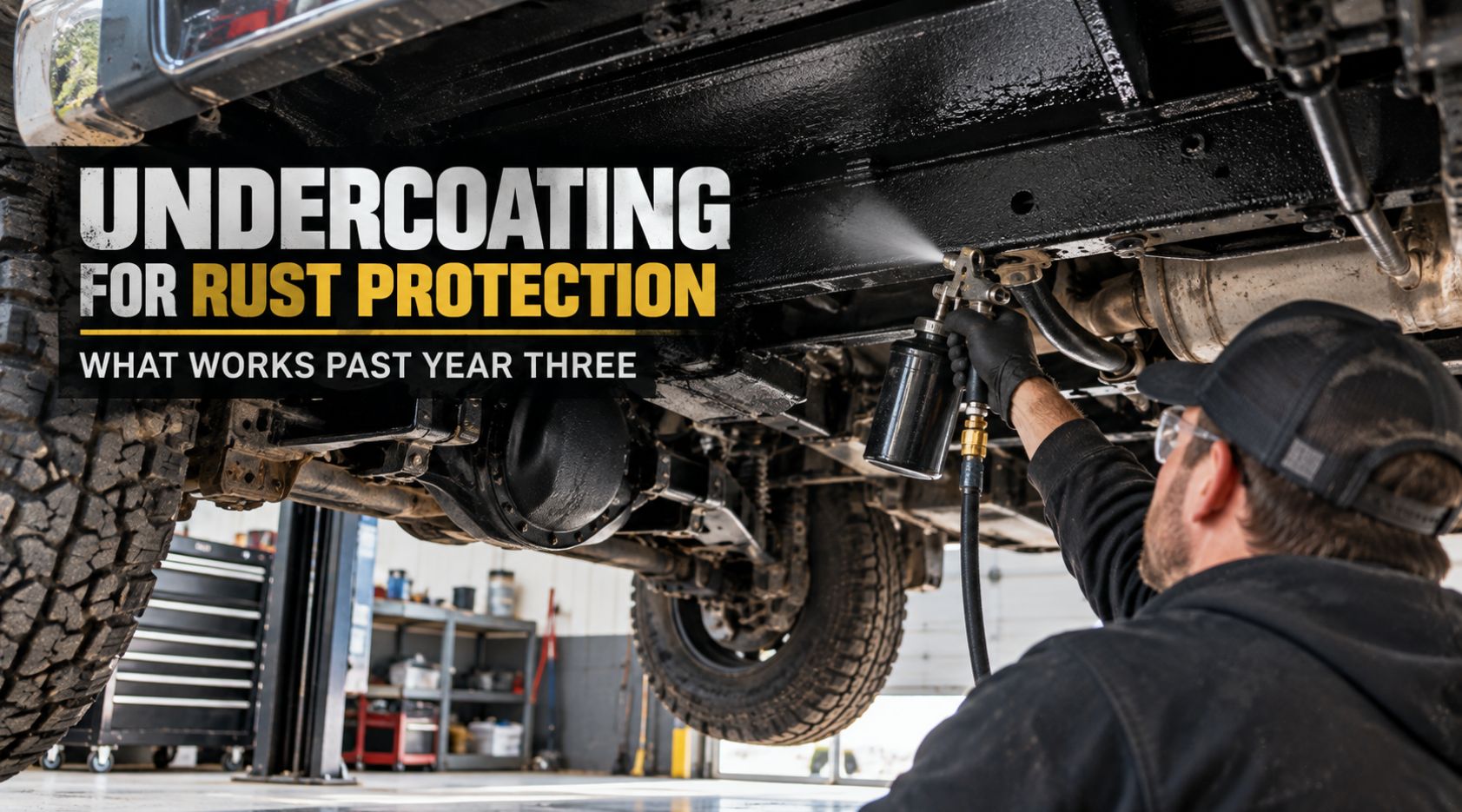
Spray-applied polyurea or polyurethane undercoating bonds directly to the substrate and cures into a seamless, flexible film, and this is where truck undercoating rust protection genuinely changes character compared to the other two options. Because it’s chemically bonded rather than sitting on the surface, it doesn’t wash off, doesn’t require annual reapplication, and flexes with the frame through vibration and temperature swings without cracking the way a non-bonded coating eventually does.
This is exactly why a properly applied spray coating tends to be the option still performing well past year three, five, and beyond, provided the initial application included proper surface preparation. Our piece on how long a spray-in bedliner lasts and what shortens it covers the same underlying principle, bonded coating quality depends heavily on application, not just material, and that logic applies just as directly to undercoating as it does to bed protection.
Undercoating Comparison Past Year Three
| Undercoating Type | Year One Appearance | Year Three-Plus Reality |
|---|---|---|
| Oil/wax-based | Looks protective, easy DIY application | Significant wear without reapplication, protection often overestimated |
| Rubberized | Good coverage, better durability than oil-based | Cracking or peeling at high-flex points becomes more common |
| Spray-applied bonded coating | Seamless, professionally applied finish | Continues performing similarly to day one if properly applied |
What Actually Determines Long-Term Performance
Surface preparation before any undercoating is applied matters more to long-term truck undercoating rust protection than the product choice itself, in a lot of cases. A bonded spray coating applied over a dirty, rusty, or contaminated surface won’t perform to its potential regardless of how good the material is, and this is a mistake that isn’t visible until the coating starts failing at the exact spots where prep was inadequate.
Reapplication discipline matters just as much for the products that require it. Oil and wax-based coatings can actually perform reasonably well long-term, but only if the owner actually keeps up with the recommended reapplication schedule, something that in practice happens far less consistently than manufacturers assume when writing their maintenance recommendations.
Climate and driving conditions shift the calculation too. A truck in a heavy road salt region facing repeated winter exposure puts far more demand on any undercoating than one in a dry, moderate climate, and the gap in performance between coating types tends to widen faster in harsher conditions. Owners considering a DIY approach to undercoating should weigh this against the consistency a professional bonded application offers. Our piece on DIY bedliner products and what they do and don’t deliver covers a closely related version of this same tradeoff between convenience and long-term performance.
Signs Your Current Undercoating Is Failing
A few signs suggest it’s time to reassess rather than assume the existing coating is still doing its job. Visible thinning or bare spots where the coating has worn through completely, especially at wheel wells and along frame rails, point toward failure regardless of coating type. Cracking or flaking on rubberized coatings, particularly at flex points, signals the coating is losing its bond integrity. And the most telling sign of all, actual surface rust starting to appear despite an undercoating being present, means whatever protection was there has already been compromised at that location, even if the rest of the coating still looks intact.
Things to Consider Before Choosing an Undercoating Approach
- Are you prepared to maintain a reapplication schedule if choosing an oil or wax-based product, or would a bonded coating’s lower maintenance demand be a better fit for your habits?
- How severe is your climate’s road salt and moisture exposure, and does that push the calculation toward a more durable, bonded option?
- Has the vehicle’s existing undercarriage been properly cleaned and inspected for existing rust before any new coating goes on, since coating over active corrosion doesn’t solve the underlying problem?
- Is the shop or product you’re considering being upfront about realistic reapplication intervals, or does the marketing imply a one-time application will last indefinitely when it won’t?
- Does the cost comparison account for total cost over several years, not just the upfront price of the first application?
For a broader look at how bonded coatings hold up against moisture and rust specifically, our comparison of spray-in versus drop-in bedliners on moisture and rust covers the same underlying principle, that a bonded, gap-free coating outperforms alternatives that leave room for moisture to collect, applied to the bed rather than the undercarriage but built on identical logic.
The Real Cost Comparison Over Time
Oil-based undercoating looks cheapest on a single-application basis, but factoring in annual or biannual reapplication over five years often brings the total cost closer to, or in some cases past, what a one-time bonded spray application would have cost upfront. That math doesn’t always favor the “cheap” option once the full ownership timeline is considered, particularly once labor time for repeated reapplications gets factored in alongside material cost. Understanding what’s actually in these coatings and how the application process affects longevity helps make sense of why the upfront price difference doesn’t tell the whole cost story. Our overview of what bedliners and related coatings are made of and how they’re applied covers that foundation, which applies conceptually to undercoating chemistry as much as bed coatings.
Frequently Asked Questions
How often does oil-based undercoating need to be reapplied?
Typically annually or more frequently depending on climate and mileage, though many owners apply it once and don’t keep up with the recommended schedule, which significantly reduces its actual protective value over time.
Does spray-applied undercoating really last longer than rubberized coatings?
Generally yes, since it bonds directly to the substrate rather than sitting on top of it, which means it doesn’t crack or peel at flex points the way a non-bonded coating tends to after a few years of vibration and temperature cycling.
Is it worth paying more for a bonded spray undercoating upfront?
For most owners planning to keep a vehicle long-term, especially in a climate with significant road salt exposure, the reduced maintenance and longer effective protection window tends to justify the higher upfront cost compared to a product that needs regular reapplication.
Can undercoating be applied over existing rust?
It shouldn’t be. Existing rust needs to be properly treated and, where necessary, repaired before any new coating goes on, since coating over active corrosion doesn’t stop the underlying process, it just hides it temporarily.
What’s the most overlooked factor in long-term undercoating performance?
Surface preparation before application. Even a high-quality bonded coating underperforms significantly if applied over a dirty, rusty, or improperly prepared surface, which is a mistake that often isn’t visible until the coating starts failing years later.
Conclusion
The real measure of truck undercoating rust protection isn’t how a fresh application looks, it’s how the coating is holding up three, five, or more years down the road, after real exposure and, for some coating types, whatever reapplication schedule the owner actually kept up with rather than the one recommended on the label. Bonded spray coatings tend to win this longer-term comparison specifically because they don’t depend on ongoing maintenance discipline the way oil-based products do, but the deciding factor for any option ultimately comes back to proper surface preparation at the time of application, something no coating chemistry can compensate for after the fact.
0 comments