Sprayed In Bedliner
Bedliner Data-Sheet Terms: A Reference for Comparing Quotes
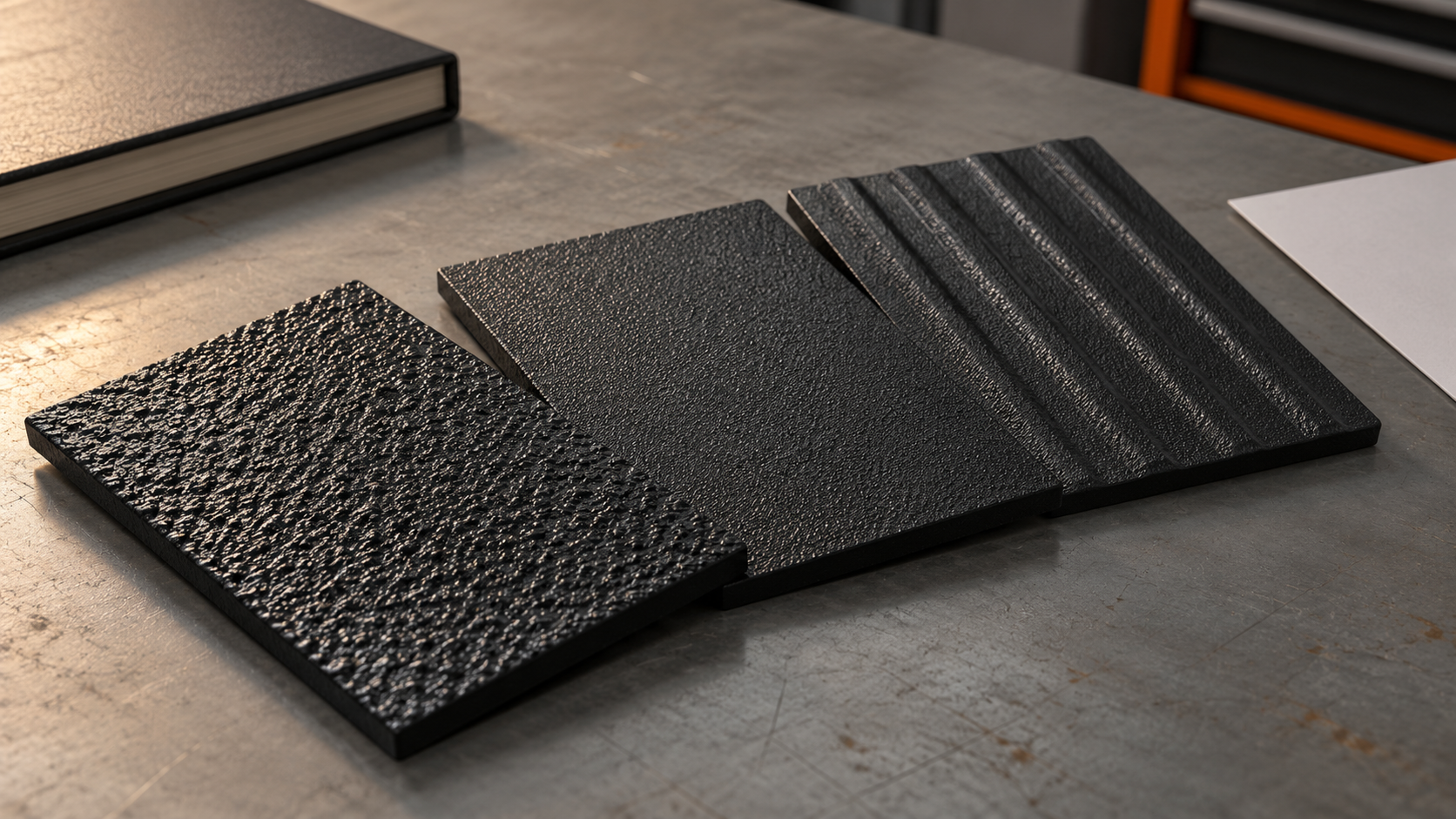
Bedliner quotes and technical data sheets often put very different numbers next to one another: thickness, hardness, tensile strength, tack-free time and return-to-service time. This reference explains what to ask about those terms so a specification becomes useful information rather than a collection of impressive figures.
Use the current documents for the exact liner and any primer or topcoat proposed for your truck. This is a researched reading guide, not a product ranking, laboratory test or spray-application procedure.
Start with the document and the complete system
- Technical data sheet (TDS)
-
The product’s technical reference. Record its revision, product name and the conditions attached to each value. A sheet for a similarly named coating may describe a different formulation.
- Safety data sheet (SDS)
-
A separate source of hazard and handling information; OSHA’s SDS format identifies the required information categories. Do not use a raw component’s flash point or storage instructions as proof that finished bedliner is suitable for hot cargo.
- System
-
The combination being installed, not just the most familiar product name. Ask which substrate, preparation, primer, liner and optional topcoat are included, and which documents govern the combination.
For a concrete example of why headings matter, the ArmorThane SureGrip TDS lists application-related information, physical properties and return-to-service information separately. It also qualifies its properties as approximate. A data sheet is not evidence that your truck’s installed coating has been individually tested.
Thickness and coverage
- Dry film thickness (DFT)
-
The thickness of the finished coating, not the height of a texture peak judged by eye. Ask what thickness is specified, which areas it covers and how the installer will verify it.
- Wet film thickness (WFT)
-
The coating’s thickness before drying or curing is complete. Do not compare a wet-film figure with another quote’s dry-film figure as if they were the same measurement.
- Mil
-
One thousandth of an inch. It is not a millimeter. For orientation, 100 mils is 0.100 inch, or 2.54 millimeters; this conversion is not a recommended bedliner thickness.
- Coverage
-
Area covered by a stated quantity under stated assumptions. Keep the target thickness and loss allowance with the number. A larger area per gallon does not, by itself, mean a better installed liner.
Elcometer’s coating-thickness guide distinguishes finished-film measurement from appearance and notes that specifications can include minimum and maximum thicknesses. Ask for the system’s actual target; “as thick as possible” is not a specification.
Properties are different tests, not interchangeable scores
- Hardness
-
Resistance measured by a specified indentation test. Keep the scale with the number: Shore A and Shore D results are not interchangeable. ASTM’s D2240 overview explains that different durometer types do not have a simple conversion relationship. Harder does not automatically mean better for every job.
- Tensile strength and elongation
-
Test results describing a specimen’s behavior under tension. ASTM’s D412 overview explains why comparison requires matching test conditions. Keep the method and conditions attached. Do not turn a specimen’s elongation percentage into a claim that a coated truck bed can deform by the same amount without damage.
- Abrasion result
-
A result under a named wear-test setup. Comparing bare numbers is unhelpful when the wheel, load, cycle count or reported units differ. Taber’s own wheel guidance explains that wheel choice represents only a subset of real contact conditions. Ask whether the results describe comparable tests before ranking them.
Timing and service limits
- Tack-free time
-
A surface-condition milestone, not automatic permission to load the bed. Follow the installed system’s instructions for the intended use.
- Return to service
-
The point at which a specified use is permitted under the manufacturer’s conditions. Ask what “light use,” cargo loading or full service means for your job, and get the handover instruction in writing.
- Service temperature
-
A finished-product use limit, distinct from application and component-storage temperatures. Ask about exposure type, duration and the complete system rather than transferring a number from one heading to another.
Make the quote easier to compare
For each proposal, record the product system, covered areas, specified thickness, finish, exclusions, release-to-use instructions and applicable warranty document. Leave unsupported claims marked “needs clarification.” For the collection appointment itself, use our bedliner handover checklist. The purpose of this reference is to make the language precise—not to choose a winner from one laboratory number.